EducationUSA College Fair Opens New Opportunities for Ghanaian Students
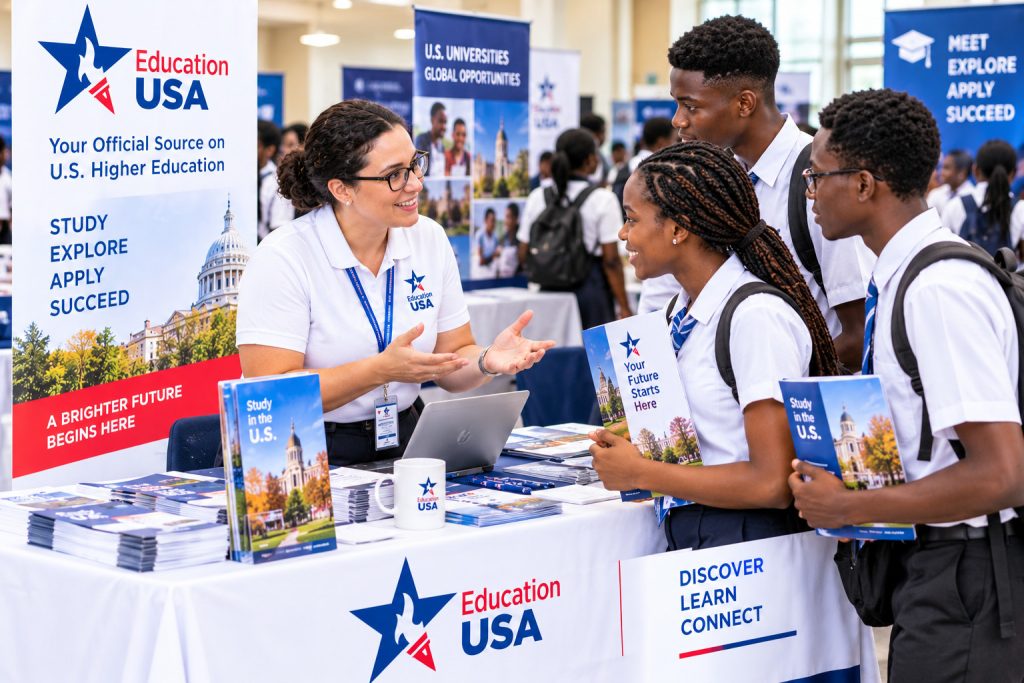
Ghanaian students interested in studying in the United States are being given a new opportunity to learn directly from universities and education advisers as the EducationUSA College Fair 2026 comes to Kumasi and Accra.
The education fair is bringing representatives from accredited U.S. colleges and universities together with prospective students who want to learn more about undergraduate and graduate study opportunities in the United States.
According to information reported by MyJoyOnline, the fair will allow students to ask questions about university admissions, academic programmes, tuition costs, scholarships, testing requirements and student visas. The event is particularly useful because students can speak directly with university representatives instead of depending entirely on information found online.
For many Ghanaian students, studying abroad can seem complicated. Questions about which university to choose, how much tuition costs, how to apply, how to secure financial assistance and how to prepare for a student visa can make the process difficult.
The EducationUSA College Fair is designed to make that process easier by giving students access to information and advisers in one place.
What Is the EducationUSA College Fair?
The EducationUSA College Fair is an educational event that connects students with representatives of U.S. higher education institutions.
EducationUSA is a U.S. Department of State network with more than 430 advising centres in over 175 countries and territories. Its role includes providing students with accurate and current information about opportunities to study at accredited higher education institutions in the United States.
EducationUSA advising centres also help students understand the U.S. higher education system, the application process, financing options, student visa requirements and preparation for studying in the United States.
The Ghana fair therefore provides more than an opportunity to collect brochures or listen to presentations. Students can use the event to ask specific questions about their own educational plans.
This can be particularly valuable for students who are still at the research stage and have not yet decided which university or programme they want to pursue.
EducationUSA College Fair Comes to Kumasi and Accra
The 2026 EducationUSA College Fair is scheduled to take place in both Kumasi and Accra.
The Kumasi fair is scheduled for Thursday, September 24, 2026, at the Lancaster Hotel in Kumasi. The undergraduate session is scheduled for 8:30 a.m. to noon, while the graduate session is scheduled for 1 p.m. to 4 p.m.
The Accra fair is scheduled for Friday, September 25, 2026, at La Palm Royal Beach Hotel. The undergraduate session is scheduled for the morning, followed by the graduate session in the afternoon.
The graduate sessions are aimed at people who already have undergraduate degrees and are considering master’s or doctoral study in the United States.
This means the event is not only for secondary school students. University graduates and other prospective postgraduate students can also benefit from the opportunity.
Students Can Meet University Representatives Directly
One of the most important features of the EducationUSA College Fair is the opportunity for students to interact directly with university representatives.
Searching for universities online can provide a lot of information, but students may still have unanswered questions. University websites can explain admission requirements, programmes and fees, but students may want clarification about how particular requirements apply to their circumstances.
At the fair, students can ask representatives about their intended programmes, admission requirements, application deadlines, financial aid and other areas that may affect their decisions.
Education and Cultural Attaché Donya Eldridge said students should not feel that they need to have everything prepared before attending the fair. She encouraged prospective students to come with questions about admission requirements, programmes, tuition, financial aid and testing.
This is important because some students may avoid education fairs because they believe they must already have excellent test scores or a completed application.
The purpose of an event like this is also to help students understand what they need to do next.
Scholarships Will Be an Important Part of the Conversation
The cost of studying abroad is one of the biggest concerns for many Ghanaian families.
Tuition, accommodation, food, transportation, health-related expenses and other costs can make international education expensive. However, financial assistance may be available depending on the institution, programme and student’s circumstances.
EducationUSA has encouraged Ghanaian students not to focus only on traditional academic scholarships.
According to MyJoyOnline, students have also been encouraged to explore other forms of financial assistance, including athletic scholarships.
This means students should ask universities about the different types of financial support available rather than assuming that only students with the highest academic results can receive assistance.
Students should also ask whether financial aid is available to international students and what requirements must be met.
Understanding these details early can help students plan realistically.
Why Students Should Ask Questions
A major advantage of attending the EducationUSA College Fair is the chance to ask questions that are specific to a student’s situation.
For example, a student interested in engineering may want to know which universities offer their preferred engineering programme, what subjects are required for admission and whether international students are eligible for financial assistance.
Another student may be interested in business, computer science, medicine-related fields, communications, economics or another programme.
The questions will differ from student to student.
Students should therefore avoid attending the fair simply to collect information. They should think about their educational goals and prepare questions before speaking with university representatives.
Even if a student is not ready to apply immediately, the information gained can help them understand what they need to prepare for in the future.
Ghanaian Students Should Start Preparing Early
One lesson students can take from the EducationUSA College Fair is the importance of early preparation.
Studying abroad is not something that should normally be left until the last minute. Students may need time to research universities, identify suitable programmes, understand admission requirements, prepare applications, arrange supporting documents and explore funding opportunities.
Some programmes may also have specific testing or application requirements.
Starting early gives students more time to understand the process instead of rushing when deadlines are approaching.
EducationUSA itself describes the U.S. study process through five broad steps: researching options, financing studies, completing an application, applying for a student visa and preparing for departure.
Students can use these stages as a general framework when planning their journey.
Students Do Not Have to Know Everything Before Attending
Another important message from the organisers is that students should not feel pressured to arrive with a perfect application.
A student may still be deciding what to study. Another may not yet have taken the required tests. Someone else may simply want to understand how U.S. university education works.
That should not prevent them from attending.
An education fair can actually be useful at the beginning of the process because students can learn what they need to do before applying.
For younger students, attending an event like this can also help them understand what they may need to work toward during the remaining years of secondary school.
The Fair Is Useful for Parents Too
Parents can also benefit from understanding the process.
Studying abroad involves financial and practical decisions that affect the whole family. Parents may have questions about tuition, financial assistance, accommodation, application procedures and other costs.
Having accurate information can help families make better-informed educational plans.
EducationUSA centres in Ghana also provide advising services and guidance to prospective students. The EducationUSA Accra centre, for example, provides information on undergraduate and graduate study, admissions, financing education, student visas and preparation for study in the United States.
Students and parents who are unable to answer every question during the fair can therefore continue seeking guidance through EducationUSA’s advising services.
Students Should Research Universities Before the Fair
Although students can attend without having a completed application, some preparation can make the experience more useful.
Students should think about the subjects or programmes they are interested in and identify universities that offer them.
They can then prepare questions before meeting university representatives.
For example, a student could ask about admission requirements, application deadlines, tuition, scholarships, accommodation, testing and opportunities available to international students.
Students can also take notes during conversations.
Writing down important information can make it easier to compare universities later.
The goal should not simply be to speak with as many representatives as possible. Students should focus on collecting information that helps them understand which institutions and programmes may fit their educational plans.
What Universities Are Expected to Attend?
According to the list published by MyJoyOnline, participating institutions include Bryant University, Calvin University, Canisius University, Duquesne University, East Carolina University, Goucher College, Harvard University, Hult International Business School, Indiana University Indianapolis, James Madison University, Lewis University, Middle Tennessee State University, North American University, Northeastern University, Park University, Rice University, Rowan University, Saint Louis University, Seattle Colleges, Temple University, Tufts University, University of Bridgeport, University of Massachusetts Lowell, University of Texas at Dallas, University of Vermont and Virginia Commonwealth University.
The presence of universities with different programmes and institutional profiles gives students an opportunity to explore a range of options.
Students should remember, however, that the presence of a university at a fair does not automatically mean that it is suitable for every student.
Each student should consider their own programme interests, admission requirements, financial situation and educational goals.
The Opportunity Goes Beyond University Admissions
The EducationUSA College Fair is also an opportunity for students to learn about the wider experience of studying in the United States.
Students may want to ask about campus life, international student support, academic advising, accommodation and opportunities available to students outside the classroom.
These questions matter because choosing a university involves more than looking at its name.
A university can offer a programme a student likes, but students also need to understand the environment in which they will be studying.
Learning about these issues before applying can help students prepare more realistically.
Why This Matters for Ghanaian Students
For Ghanaian students, access to reliable information about international education can make a significant difference.
There is a large amount of information about studying abroad on social media and other online platforms. However, not every piece of information found online is accurate or suitable for every student.
EducationUSA describes itself as an official source of information about U.S. higher education and provides guidance through its international advising network.
This makes direct access to advisers and university representatives particularly useful.
Students can ask questions and receive information from people connected to the institutions and advising system rather than depending entirely on rumours or incomplete information.
Students Should Be Careful About Educational Misinformation
The process of applying to universities abroad can sometimes create confusion.
Students may hear claims about guaranteed scholarships, guaranteed admission or shortcuts to obtaining a student visa.
Students should be cautious about such claims.
EducationUSA advises students through official channels and provides information about admissions, financing, student visas and preparation for studying in the United States.
Students should verify important information through official university and EducationUSA sources before making financial commitments or submitting applications.
This is especially important when dealing with third parties who claim they can guarantee admission or scholarships.
The Role of EducationUSA Advising Centres
The college fair is only one part of the support available to students.
EducationUSA has advising centres in Ghana, including centres in Accra and Kumasi.
According to EducationUSA, its Accra centre provides one-on-one advising, group sessions, outreach activities, college fairs and guidance on undergraduate and graduate study, admissions, financing education and student visas.
MyJoyOnline also reported that the Ghana centres hold regular orientations for students learning how to begin the U.S. university application process.
This means students who attend the fair can continue seeking guidance after the event.
For a student who is unfamiliar with the U.S. university system, continued advising can be useful throughout the application process.
A Chance to Think Bigger About Education
For many young people, opportunities to study abroad can seem distant.
The EducationUSA College Fair brings information about those opportunities closer to Ghanaian students.
A student may attend the event without knowing exactly where they want to study. They may leave with a clearer understanding of possible programmes, requirements and financial options.
Another student may discover a university or programme they had never considered.
The most important outcome is not simply attending the fair. It is using the information gained to create a realistic education plan.
Students should ask questions, take notes, research further and discuss their options with trusted parents, teachers, counsellors or education advisers.
What Students Should Do After the Fair
The work does not end when the fair closes.
Students should review the information they collected and identify universities that match their interests.
They should then visit the official university websites and verify admission requirements, deadlines, tuition information and financial aid opportunities.
Students should also keep track of important dates.
If they discover that a particular programme requires additional preparation, they can begin working on those requirements early.
Students who are still in secondary school can use the information to plan ahead rather than waiting until their final year.
Education Can Open New Paths for Ghanaian Youth
The EducationUSA College Fair comes at a time when education and international opportunities are becoming increasingly important to young people.
Ghanaian students are exploring opportunities not only within Ghana but also at universities around the world.
Events that connect students directly with universities can help reduce some of the uncertainty surrounding international education.
They also encourage students to think carefully about their goals, research their options and prepare for the future.
For students considering the United States, the 2026 EducationUSA College Fair provides an opportunity to start or strengthen that research process.
Final Thoughts
The EducationUSA College Fair 2026 is creating an important opportunity for Ghanaian students interested in studying in the United States.
With universities expected to participate in fairs in Kumasi and Accra, students can learn directly about academic programmes, admissions, tuition, scholarships, testing and student visa requirements.
Students do not need to have every part of their application completed before attending. Instead, they can use the event to ask questions, understand their options and learn what steps they should take next.
For students who have always wanted to study in the United States but did not know where to begin, the fair could be a useful starting point.
The most important thing is to approach the opportunity with preparation and curiosity. Ask questions, verify information, understand the costs and requirements, and take time to research each university before making decisions.
For Ghanaian students planning their educational future, opportunities like the EducationUSA College Fair show why being informed and starting early can make the journey toward higher education much clearer.
Sources used include EducationUSA and MyJoyOnline for the current 2026 fair details and EducationUSA advising information.