Ghana to Make Sign Language Compulsory in Basic Schools
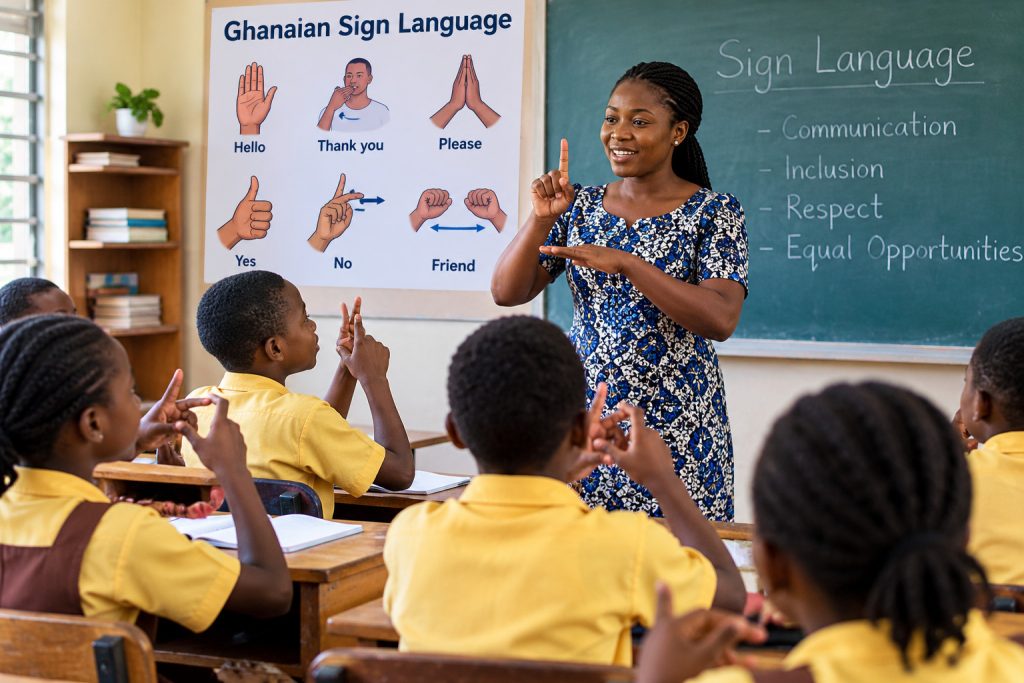
Ghana is preparing to introduce Sign Language as a compulsory subject in basic schools within the next five years, in a move aimed at strengthening inclusive education and helping children communicate more effectively with deaf learners.
The announcement was made by Gloria Ntim, an official of the Special Education Division of the Ghana Education Service (GES), during activities marking the International Day of Sign Languages in Accra on September 23, 2026. According to the Ghana News Agency, the National Council for Curriculum and Assessment (NaCCA) has already approved Sign Language for piloting in selected special schools before a possible nationwide rollout.
The proposed change could introduce more Ghanaian children to Sign Language from an early stage of their education. Rather than limiting communication support to specialised schools, the plan would help make basic education more inclusive by giving hearing learners an opportunity to learn how to communicate with their deaf colleagues.
Sign Language to Be Piloted Before Nationwide Introduction
The proposed compulsory subject will not immediately be introduced in every basic school. The current plan involves piloting the Ghanaian Sign Language curriculum in selected schools before considering a nationwide rollout.
A recent report from T-TEL indicates that NaCCA and GES have been piloting the Ghanaian Sign Language curriculum in four schools: Savelugu School for the Deaf, Mampong Demonstration School for the Deaf, Sekondi School for the Deaf and Mampong Senior High Technical School for the Deaf. The pilot has involved learners at KG1, Primary 1, JHS 1 and SHS 1 levels, with trained teachers supporting implementation.
The pilot stage is important because it allows education authorities to assess how the curriculum works in real classroom situations. It can also help identify the teaching materials, teacher-training requirements and other resources that will be needed if Sign Language is eventually introduced more widely.
Sign Language Could Become an Examinable Subject
The proposed change goes beyond simply teaching students a few signs.
According to the GES Special Education Division official, Sign Language is expected to become an examinable subject in the coming years. The aim is to encourage children to develop meaningful communication skills and interact more effectively with deaf classmates.
Making the subject examinable could also give Sign Language a stronger position within the education system. Students may be more likely to take the subject seriously when it forms part of their formal learning and assessment.
For teachers, parents and schools, however, this would also create a need for adequate preparation. Schools would require qualified teachers, appropriate learning materials and a curriculum that can be delivered effectively across different age groups.
Why Ghana Is Looking at Sign Language Education
One of the major reasons behind the proposed change is inclusion.
Deaf children can face communication barriers when interacting with people who do not understand Sign Language. When other students have basic Sign Language skills, communication inside and outside the classroom can become easier.
Learning Sign Language can therefore benefit more than deaf learners. It can help hearing students understand their deaf colleagues and create opportunities for stronger social interaction.
The initiative also reflects a broader focus on inclusive education in Ghana. The Ghana Education Service’s Special Education Division is responsible for supporting special and inclusive education within the pre-tertiary education system.
Sign Language Is More Than a Communication Tool
At the International Day of Sign Languages event, Jennifer Asuako, a Gender and Human Rights Analyst at the United Nations Development Programme, described Sign Language as more than simply a way of communicating. She emphasised its importance as a fundamental right.
This perspective is important because inclusive education is not only about putting learners with disabilities into classrooms. It is also about creating an environment where they can participate meaningfully.
For a deaf learner, being able to communicate with teachers, classmates and other members of the school community can have a significant effect on participation in school life.
What the Change Could Mean for Ghanaian Schools
If the proposed nationwide rollout takes place, basic schools across Ghana could eventually have to incorporate Sign Language into their teaching programmes.
This would create new responsibilities for education authorities and schools. Teacher training would be particularly important because the success of the programme would depend heavily on having teachers who can confidently teach the language.
Schools may also need appropriate textbooks, visual learning materials and other resources designed for Sign Language instruction.
The experience from the pilot schools could help education officials determine what resources are required before expanding the programme.
Parents and Caregivers Could Also Play a Role
The development is not only relevant to schools and teachers.
Parents and caregivers could also benefit from learning more about Sign Language, particularly families with deaf children. Better communication between children and their families can support learning and social development.
Representatives at the International Day of Sign Languages activities also highlighted the importance of parents and caregivers in disability inclusion. Adwoa Okorewaa of the Inclusive Family Alliance said parents and caregivers should be recognised as essential partners in the development of children with disabilities.
This means successful inclusion may require cooperation between schools, families, communities and education authorities.
Persons With Disabilities Bill Also Remains Part of the Discussion
The discussion about Sign Language is taking place alongside calls for progress on Ghana’s Persons with Disabilities Bill, 2026.
The Ghana National Association of the Deaf (GNAD) used the International Day of Sign Languages event to engage stakeholders on the proposed legislation. Participants called for steps that would strengthen the rights and inclusion of persons with disabilities.
The issue has also been discussed during International Week of the Deaf, which runs from September 21 to 27, 2026. The week has brought together stakeholders from academia, research, government, civil society and other sectors to discuss ways of improving the participation of deaf people in national development.
What Students Should Know
For students and parents, it is important to understand that Sign Language has not suddenly become a compulsory subject in every basic school in Ghana.
The current announcement points to a planned process. Sign Language is being piloted in selected schools, with a potential nationwide introduction within five years.
Therefore, parents should not assume that every school will immediately begin teaching the subject or that students will be examined in it this academic year.
The pilot and curriculum development process will be important in determining how the policy is eventually implemented.
A Potential Step Toward More Inclusive Education
The planned introduction of Sign Language into basic education could represent an important development in Ghana’s approach to inclusive learning.
Teaching children how to communicate with deaf classmates could help reduce communication barriers and encourage greater understanding among learners.
However, successful implementation will depend on preparation. Teachers need appropriate training, schools need learning resources, and education authorities need a clear curriculum and implementation strategy.
For now, Ghana is at the pilot stage. The coming years will show how the programme develops and whether the proposed nationwide implementation can be achieved effectively.
The announcement nevertheless places Sign Language firmly within the ongoing conversation about the future of inclusive education in Ghana.