Ghana’s Double-Track SHS System Targeted for Full Phase-Out by 2027
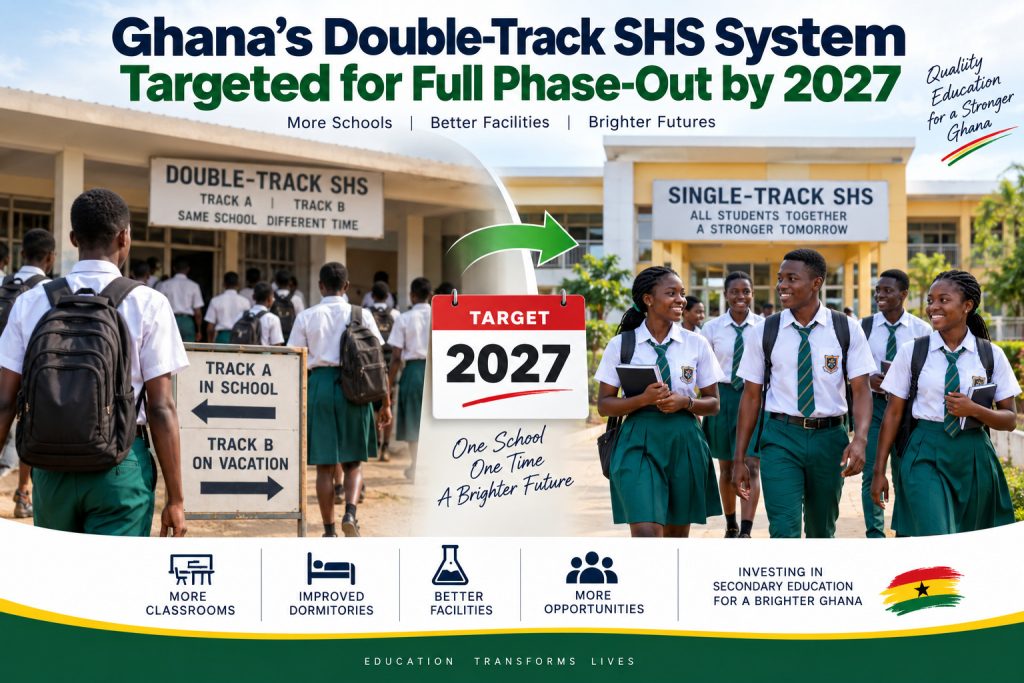
Ghana is targeting the complete phase-out of the double-track system in Senior High Schools by the end of 2027, with the government planning additional infrastructure and other measures to create enough space for students to attend school at the same time. https://ladaup.com/ges-directs-double-track-shss-to-wait-before-single-track-transition/
President John Dramani Mahama reiterated the target during a citizens’ engagement in Wa on September 12, 2026, saying that by the end of 2027, no Senior High School in Ghana should still be operating the double-track system.
The planned change is part of wider efforts to address overcrowding and expand infrastructure in the secondary education sector.
What Is the Double-Track System?
The double-track system was introduced in Ghana’s Senior High Schools in 2018 as a way of managing increased enrolment following the expansion of Free SHS.
Under the arrangement, students are divided into different groups that attend school during separate periods. While one group is in school, another group is on vacation before the groups change.
The system allowed schools with limited infrastructure to accommodate more students, but it also affected the amount of time some students spent in school and the scheduling of academic activities.
The government’s current plan is to move away from this arrangement by expanding school capacity.
Government Sets 2027 Target
President Mahama has repeatedly stated that the government wants to end double-track education across Ghana’s secondary schools by 2027.
In his September 2026 engagement in Wa, he said that by the end of 2027, students should be able to attend school and vacate at the same time rather than operating under separate tracks. (Ghana News Agency)
The government says ending the system would increase teacher-student contact hours and provide a more consistent school timetable.
The target was also announced earlier in May 2026, when the President said the government would phase out the double-track system by 2027.
US$300 Million World Bank Support
A major part of the government’s plan is the Secondary Education Transformation for Access, Relevance and Results for Jobs (STARR-J) project.
The World Bank approved US$300 million in financing for the project, which is intended to support improvements in secondary education and help Ghana eliminate the double-track system by 2027.
The programme is expected to support infrastructure expansion and improvements in selected Senior High Schools.
Earlier government announcements indicated that the funding would help upgrade schools and increase their capacity. Plans include upgrading selected Category C schools to Category B and Category B schools to Category A.
Expanding School Infrastructure
Increasing the number of classrooms and other facilities is central to the plan because schools need enough space to accommodate students under a single-track arrangement.
The government has also announced plans to construct additional E-Block Senior High Schools, particularly in communities with high populations.
According to the President, the new schools are intended to operate as community day schools in some urban areas, allowing students to travel from home rather than placing additional pressure on boarding facilities.
The government has also indicated that existing schools operating double-track will have their facilities expanded to create enough space for students to attend school at the same time.
As part of the wider effort to reduce pressure on existing schools, the government has said that 16 new Senior High Schools are being constructed.
The President said these schools would help reduce congestion in existing institutions and contribute to the effort to end double-track education.
Additional infrastructure is expected to include classrooms, dormitories and other facilities needed to support increased enrolment.
The approach is intended to address the capacity challenges that contributed to the introduction of the double-track system.
Why the Phase-Out Matters to Students
The end of double-track education would change how many students experience Senior High School.
If schools have sufficient capacity to operate on a single track, students would attend school under a more consistent academic calendar rather than being divided into alternating groups.
The government has linked the change to increased contact hours between teachers and students.
President Mahama has said that increased contact time could contribute to improved learning and examination outcomes, including performance in the West African Senior School Certificate Examination.
However, achieving the target will depend on the completion and effective use of the infrastructure and resources required to accommodate students.
The Role of Teachers
Teachers will also be affected by the transition from double-track to single-track education.
A single-track system means schools must have adequate classrooms, teaching spaces and staff to accommodate students at the same time.
The government has therefore linked secondary education expansion with teacher development and improved learning conditions.
Earlier announcements under the STARR-J programme included continuous professional development for secondary-school teachers, with attention to digital literacy, critical thinking, innovative teaching methods and artificial intelligence integration.
GES Says the Phase-Out Should Maintain Access
The Ghana Education Service has previously assured parents that efforts to phase out double-track education would not reduce access to secondary education.
In May 2026, GES said preparations had been made to receive qualified BECE candidates into Senior High and Technical Schools and that the phase-out should improve teaching and learning while maintaining access for students.
This means the transition will need to be carefully managed so that increasing infrastructure capacity does not create new barriers for students seeking admission.
What Happens Before 2027?
The period leading to the end of 2027 will be important for the government’s plan.
Schools will need additional classrooms and other facilities, while ongoing construction projects will need to be completed and equipped.
The government will also need to ensure that schools have adequate teachers, furniture, laboratories, boarding facilities where required and other resources.
The availability of these facilities will determine how quickly individual schools can move away from double-track arrangements.
The transition is therefore expected to take place alongside wider expansion of Ghana’s secondary education infrastructure.
A Major Change for Ghana’s SHS System
The planned phase-out represents a significant change to the way Senior High Schools have managed increased enrolment since the introduction of double-track education.
The system was introduced as a response to pressure on school capacity, particularly following the expansion of Free SHS. The government’s current approach is to address that capacity challenge through infrastructure expansion rather than continuing the two-track arrangement.
For students and parents, the key issue will be whether schools have enough facilities to accommodate growing enrolment while maintaining teaching and learning standards.
The government has set the end of 2027 as the target for completing the transition. Progress will depend on infrastructure delivery, school capacity, staffing and the effective implementation of the programmes supporting the phase-out.
As Ghana prepares for the next stage of secondary education, the development of additional school facilities will remain an important part of efforts to create more consistent learning opportunities for students across the country.