UESD and Maleka Farms Launch Aquaculture Scholarship for Students
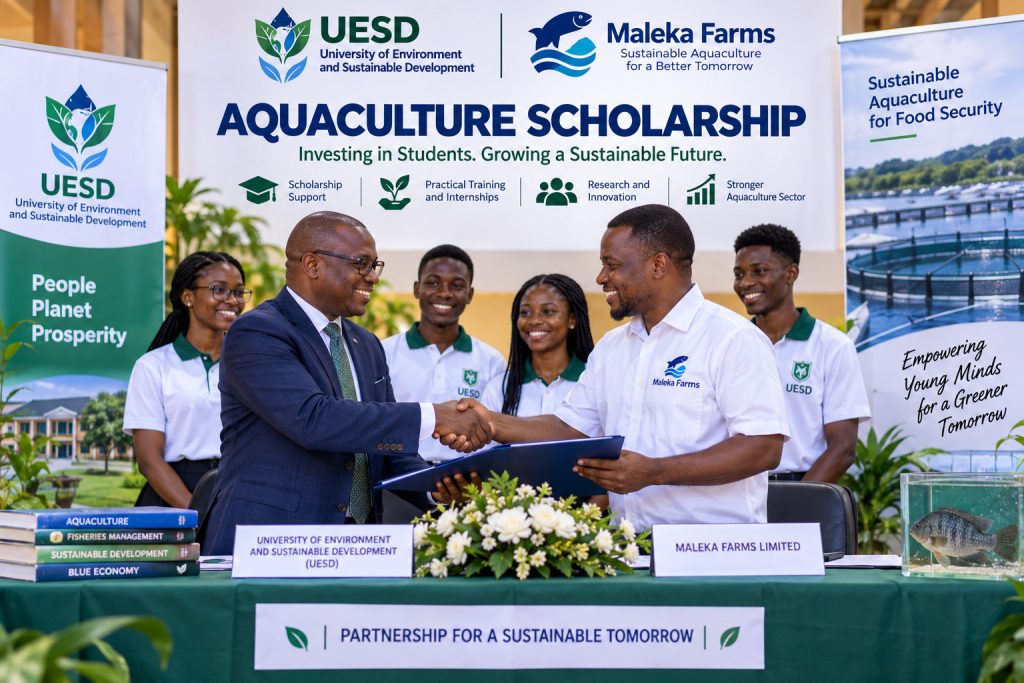
The University of Environment and Sustainable Development (UESD) has partnered with Maleka Farms Limited to launch a new scholarship programme for Ghanaian students studying aquaculture.
Known as the Maleka Excellence Scholarship for Aquaculture Students (MESAS), the initiative is designed to support academically strong students who face financial difficulties while pursuing their studies in the aquaculture field.
The partnership was formalised through a Memorandum of Understanding between UESD and Maleka Farms, a fish farming company based at Kadjena near Akuse in the Eastern Region. The scholarship is expected to begin in the 2026/2027 academic year.
Who Can Benefit From the Scholarship?
The MESAS programme will support eligible Ghanaian students in Levels 100, 200 and 300 of UESD’s Department of Water Resources and Aquaculture Management.
The programme is specifically aimed at students who demonstrate strong academic performance but face financial challenges that could affect their education.
According to UESD, applicants will be assessed using several factors, including academic performance, financial need, good character and genuine interest in aquaculture. http://scholarship opportunities for Ghanaian students
The selection process is expected to be managed through the university’s established scholarship structures, with the final selection involving the university and Maleka Farms.
What Will the Scholarship Cover?
The scholarship will cover approved academic facility user fees for successful applicants.
This support is intended to reduce the financial pressure on beneficiaries and allow them to concentrate more fully on their studies.
The scholarship is initially planned to run for five years, although the continuation of the programme will be subject to periodic review, available resources and the terms agreed between UESD and Maleka Farms.
Students who are interested should therefore pay attention to official announcements from UESD regarding application procedures, deadlines and eligibility requirements.
Students Will Also Gain Practical Experience
The scholarship goes beyond financial assistance.
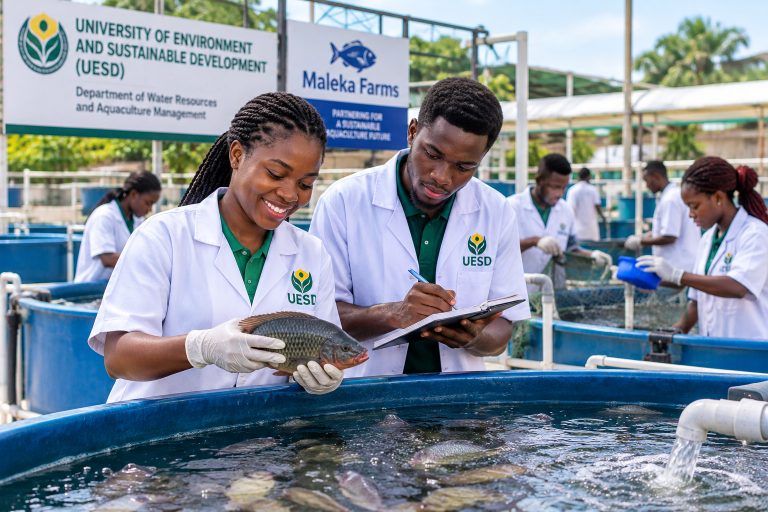
Beneficiaries are expected to have opportunities for internships, practical training and mentorship at Maleka Farms.
This industry exposure could allow students to connect what they learn in the classroom with real aquaculture operations.
Areas identified for practical work and research include fish breeding, feed development, water quality management, disease prevention and sustainable fish production.
The practical component is particularly relevant to students preparing for careers in an industry where technical knowledge and hands-on experience are important.
UESD Wants to Strengthen Aquaculture Education
The Vice-Chancellor of UESD, Professor Eric Nyarko-Sampson, described the scholarship as an important opportunity for students facing financial difficulties.
He encouraged beneficiaries to take their studies seriously and maintain the academic standards required to retain the scholarship.
The university also said it wants to strengthen its position as a centre of excellence for aquaculture studies and encouraged students to take advantage of opportunities created through partnerships with industry.
The partnership reflects UESD’s broader approach of connecting university education and research with practical industry experience.
Maleka Farms Supports Research and Innovation
Maleka Farms said it is committed to supporting education, research and innovation in agriculture and aquaculture.
The company indicated that the partnership could create opportunities for students and researchers to work on practical issues affecting the aquaculture sector.
These include improving fish production, managing water quality, developing better feeds and preventing diseases.
The collaboration could therefore provide a platform for students to gain industry experience while also contributing to research and innovation in Ghana’s aquaculture sector.
Aquaculture Could Create Career Opportunities
Aquaculture involves the farming and production of aquatic organisms, particularly fish.
The sector can create opportunities across different parts of the value chain, including hatchery operations, fish farming, processing, storage, marketing and transportation.
Maleka Farms noted that aquaculture could contribute to employment and entrepreneurship opportunities in Ghana.
For students studying aquaculture, gaining both academic knowledge and practical industry experience can help prepare them for different career paths within the sector.
A Partnership Between Education and Industry
The launch of MESAS highlights the potential benefits of collaboration between universities and private-sector organisations.
Universities provide academic and research training, while industry partners can provide practical experience, mentorship and exposure to real-world challenges.
UESD and Maleka Farms had previously established a broader collaboration covering aquaculture education, research, internships and industry engagement. The scholarship programme builds on that relationship by adding direct financial support for eligible students.
What Interested Students Should Do
Students interested in the scholarship should watch for official information from UESD about the application process.
Applicants should check the university’s requirements carefully and prepare the relevant academic and supporting documents when applications open.
Because the scholarship is targeted at academically strong students facing financial challenges, applicants should be prepared to demonstrate both their academic performance and financial circumstances.
Students should also rely on official university information rather than unofficial individuals claiming to guarantee scholarship awards.
Supporting the Next Generation of Aquaculture Professionals
The MESAS scholarship is expected to give selected students an opportunity to continue their aquaculture education with reduced financial pressure while gaining practical exposure to the industry.
For UESD, the initiative also supports its goal of developing skilled professionals who can contribute to Ghana’s sustainable development and aquaculture sector.
With the programme scheduled to begin in the 2026/2027 academic year, students in Levels 100, 200 and 300 who meet the requirements will have an opportunity to seek support through the university’s scholarship process.
The partnership between UESD and Maleka Farms therefore brings together financial assistance, academic training and practical industry exposure as part of an effort to develop future aquaculture professionals in Ghana.