
If you have ever tried to sell something online and felt frustrated, you are not alone. You post content. You run ads. You share links. But sales feel random. Some days you sell. Some days you don’t. It feels unpredictable.
This is usually a sign that there is no proper sales funnel in place.
A sales funnel is not a complicated marketing trick. It is simply a structured path that guides strangers from first contact to becoming paying customers. Without a sales funnel, you are hoping people figure things out on their own. With a sales funnel, you guide them step by step.
The good news is this. You do not need to be a marketing genius to build a sales funnel that works. You just need clarity, structure, and consistency.
In this guide, we will break down how to create a sales funnel that works in simple language. No hype. No confusing terms. Just practical steps you can apply to your business.
What Is a Sales Funnel Really
A sales funnel is the journey people take from discovering you to buying from you.
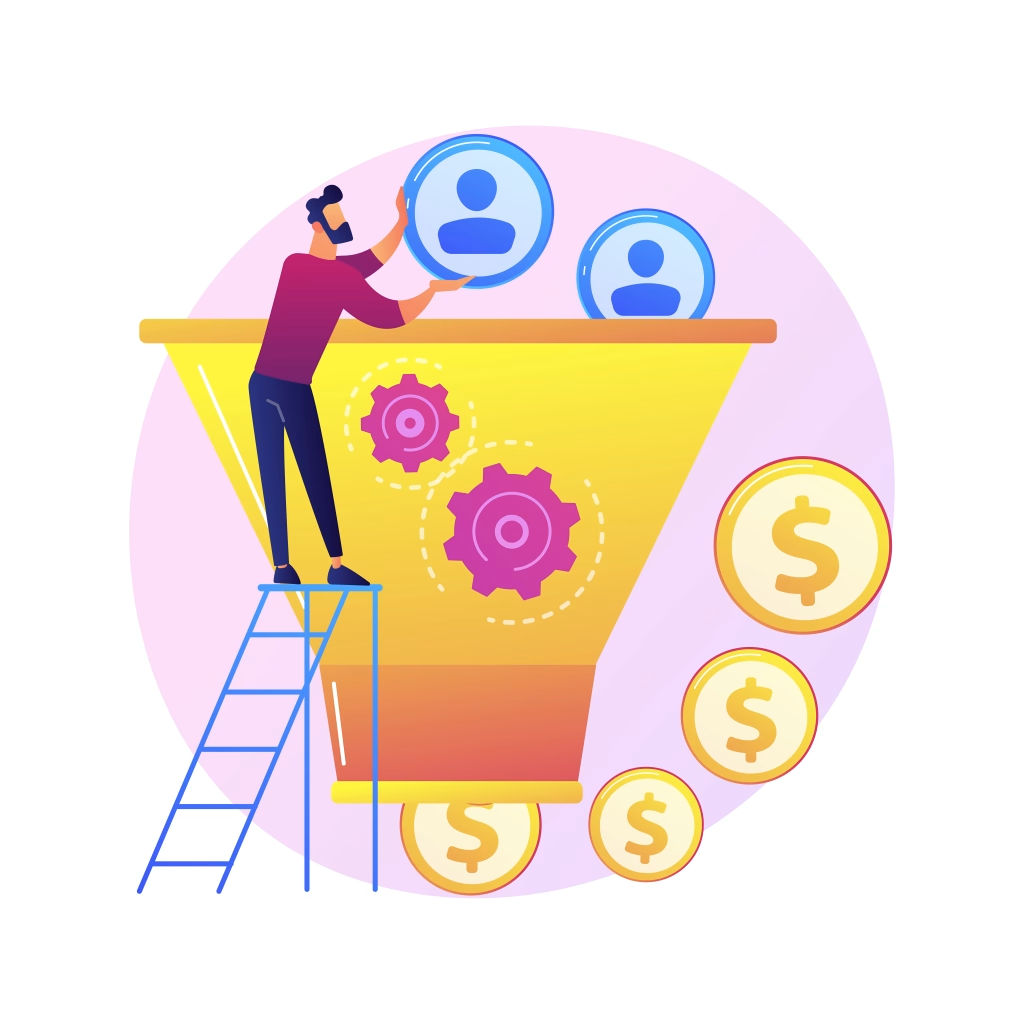
Imagine pouring water into a real funnel. At the top, many people enter. As the funnel narrows, fewer people move down. At the bottom, only a portion becomes customers.
That is how a sales funnel works.
At the top, you attract attention. In the middle, you build trust. At the bottom, you present an offer.
Marketing frameworks like AIDA, which stands for Attention, Interest, Desire, Action, have been discussed for decades in marketing education and even referenced in business research contexts associated with institutions like Harvard Business School. While the terms may vary, the idea stays the same. People need stages before they buy.
A working sales funnel respects that process.
Why Most Businesses Struggle Without a Sales Funnel
Many small businesses and creators focus only on the final step. They promote their offer repeatedly without building trust first.
Imagine meeting someone for the first time and immediately asking them to marry you. It sounds extreme, but that is what happens when you push sales without a sales funnel.
Customers need time. They need information. They need confidence.
Without a sales funnel, marketing becomes scattered. You post content one day, disappear the next. You run ads but have no follow-up system.
A sales funnel creates flow. And flow creates consistency.
The Three Core Stages of a Sales Funnel
Every effective sales funnel has three basic stages. Awareness, consideration, and conversion.
In the awareness stage, people discover you. Maybe through social media, search engines, or ads.
In the consideration stage, they learn more. They read content. They join your email list. They watch your videos.
In the conversion stage, they decide to buy.
Companies like HubSpot often explain these stages in their marketing frameworks because structured funnels increase conversion rates.
When you design your sales funnel, you must respect these stages. Skipping them weakens results.
Step One Attract the Right People
A sales funnel begins with attention, but not just any attention. The wrong audience entering your sales funnel wastes time and money.
You must define who you are trying to attract.
What problem do they have? What solution are they searching for? What words do they use when describing their pain?
Search behavior research from companies like Google shows that people actively look for solutions online. If your content matches their search intent, your sales funnel begins naturally.
Attraction can happen through blog posts, social media content, YouTube videos, or paid ads. The key is clarity. Speak directly to a specific problem.
A focused message strengthens your sales funnel.
Step Two Offer Value Before Asking for Money
Trust is the bridge inside a sales funnel.
People do not buy from strangers easily. They buy from people they trust.
That is why the middle of your sales funnel must provide value. This can be free guides, helpful videos, email tips, or educational content.
The goal is simple. Show that you understand their problem and can help solve it.
Research in consumer behavior, often cited by organizations like American Marketing Association, emphasizes that trust heavily influences purchasing decisions.
A sales funnel without trust feels pushy. A sales funnel with trust feels helpful.
Step Three Capture Leads Properly
One of the biggest mistakes in building a sales funnel is not collecting contact information.
If someone visits your website and leaves, you may never see them again.
This is where lead capture comes in. Offer something valuable in exchange for an email address. It could be a checklist, short ebook, mini course, or discount code.
Email remains powerful. Platforms like Mailchimp report that email marketing continues to deliver strong return on investment for businesses.
When someone joins your list, your sales funnel becomes more controlled. You can follow up. You can nurture. You can build deeper trust.
Step Four Nurture With Consistent Communication
A sales funnel does not end after someone joins your email list.
This is where nurturing begins.
Nurturing means sending helpful emails, sharing stories, addressing objections, and building authority.
Think of it as conversation, not promotion.
People often need multiple touchpoints before buying. Studies referenced by various marketing platforms suggest customers may interact with a brand several times before making a decision.
Your sales funnel should guide them gently. Not rush them.
Consistency builds familiarity. Familiarity builds trust.
Step Five Present a Clear Offer
Eventually, your sales funnel must lead to a clear offer.
Clarity matters here. What are you selling? Who is it for? What problem does it solve? What result can they expect?
Confused customers do not buy.
Your sales page, checkout page, or sales conversation must be simple and direct.
Companies like Shopify emphasize streamlined checkout processes because friction reduces conversions.
Your sales funnel should make buying easy, not complicated.
Step Six Remove Objections
Even interested customers hesitate.
They may wonder if it is worth the price. They may worry about risk. They may doubt results.
A strong sales funnel addresses objections before they become barriers.
Testimonials, guarantees, case studies, and clear explanations reduce uncertainty.
Social proof is powerful. When people see others benefiting, their confidence grows.
Your sales funnel should answer questions before they are asked.
Step Seven Optimize and Improve
A sales funnel is not a one-time setup. It needs testing and improvement.
Maybe your landing page needs clearer messaging. Maybe your email sequence needs stronger storytelling. Maybe your offer needs better positioning.
Data helps. Even basic analytics tools like Google Analytics allow you to track behavior and identify weak points.
Look at where people drop off. That is where improvement is needed.
Small adjustments can significantly improve your sales funnel performance.
Common Sales Funnel Mistakes
Many people overcomplicate their sales funnel.
They build too many steps. Too many pages. Too many emails.
Simplicity works better.
Another mistake is focusing only on traffic. Traffic without structure does not convert.
Also, inconsistency kills momentum. If you start nurturing and then disappear for months, your sales funnel loses power.
Clarity, simplicity, and consistency are the backbone of a working sales funnel.
Paid Traffic and the Sales Funnel
Running ads can accelerate your sales funnel, but only if the funnel is strong first.
If your funnel does not convert organically, adding paid traffic will only amplify problems.
Platforms like Meta Platforms offer advertising tools that can drive traffic quickly. But traffic without trust and structure wastes money.
Build your sales funnel foundation first. Then scale.
The Psychology Behind a Sales Funnel
At its core, a sales funnel works because it aligns with human psychology.
People move from awareness to interest to decision gradually.
They need clarity. They need confidence. They need reassurance.
A sales funnel respects these emotional stages.
When you understand that buying is emotional first and logical second, your sales funnel messaging becomes more human.
Speak to feelings. Then support with facts.
Building a Sales Funnel for Service Businesses
If you run a service business, your sales funnel may lead to consultation calls instead of direct checkout pages.
The structure remains the same. Attract. Build trust. Capture leads. Nurture. Present offer.
Your call booking page becomes the conversion point.
Clear messaging and clear expectations are critical in service-based sales funnels.
Building a Sales Funnel for Digital Products
For digital products like courses or ebooks, automation becomes powerful.
Once someone enters your sales funnel, email sequences can educate and guide automatically.
Automation does not mean robotic. It means structured.
When set up properly, a sales funnel can generate consistent sales without daily manual effort.
The Long Term View of a Sales Funnel
The biggest benefit of a well-built sales funnel is predictability.
Instead of hoping for random sales, you understand your numbers.
If one hundred people enter your sales funnel and five buy, you can improve that number. You can increase traffic. You can refine messaging.
Predictability reduces stress.
A strong sales funnel turns marketing into a system, not guesswork.
Conclusion
Creating a sales funnel that works is not about tricks. It is about structure, clarity, and trust.
Attract the right people. Provide value. Capture leads. Nurture consistently. Present a clear offer. Remove objections. Improve over time.


