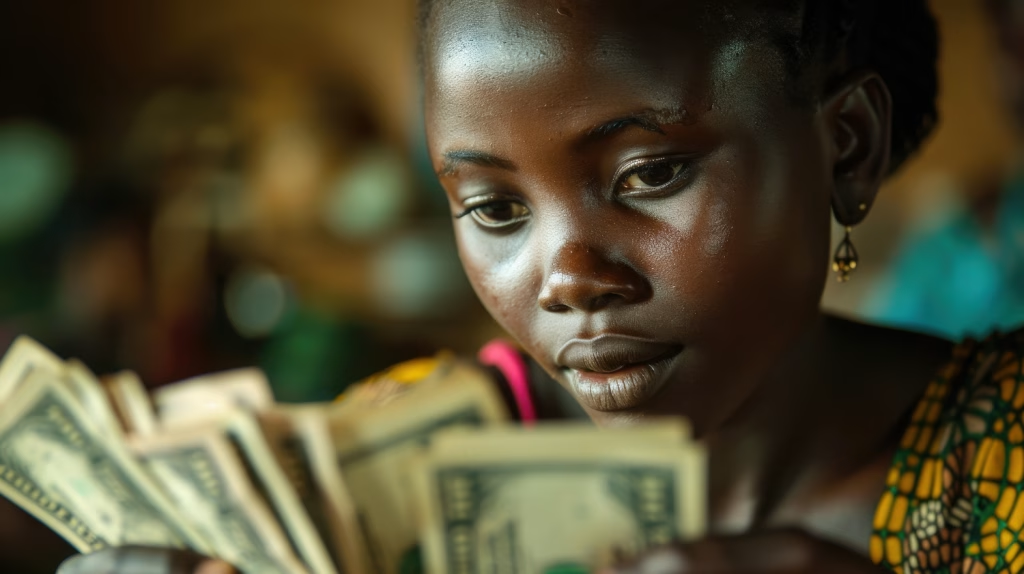
Trying to save money in Ghana when your income is unstable feels almost impossible. One month you earn something small, another month you get nothing at all, and sometimes you receive money unexpectedly. Bills still come. Food has to be bought. Transport prices keep rising. Emergency issues don’t ask whether you got paid or not. And before you realize it, everything you earn disappears within days. Many Ghanaians working in informal sectors, freelancing, doing side jobs, or running small businesses face this exact struggle.
But here is the truth that many people don’t realize: saving money is not only for people with stable salaries. Even those with irregular income can save money consistently—if they understand how money moves, how to plan around uncertainty, and how to build systems that protect their pockets. Saving money is not just about income; it is about structure, consistency, and mindset.
This article will guide you through practical, realistic ways to save money in Ghana even when your income comes like the weather—sometimes sunny, sometimes cloudy, sometimes stormy. The goal is to help you take control of your money instead of letting your money control you.
Why Saving Money Feels Impossible With Irregular Income
Saving money becomes difficult when you cannot predict what is coming in. When your income changes every week or every month, your expenses feel heavier and more urgent. You cannot plan ahead confidently because you do not know how much money you will have tomorrow.
In Ghana, most people working as freelancers, artisans, students who hustle, small business owners, mobile money agents, traders, ride-hailing drivers, and part-time workers experience this. Even people with salaries sometimes have inconsistent side earnings that make their money unpredictable. Every time you earn money, responsibilities swallow it immediately. Electricity bills, water bills, school fees, food, mobile data, transport, airtime, contributions, unexpected family issues, and the list continues.
But when you look closely, the problem is not only the income. It is the absence of a money system. It is spending without structure. It is handling money as it comes, instead of building rules that guide how you use it. When income is unstable, money disappears faster because you are using emotion, not strategy. The solution is not waiting for your income to become regular; the solution is to create systems that stabilize your money even when your earnings are unstable.
Understanding Your Money Flow Is the First Step
Before you can save money, you must understand your money. Many people know their expenses but have no idea how much they spend in a week or month. They only calculate big expenses like rent, school fees, or food, but forget about daily spending that drains money quickly.
Things like buying snacks, momo charges, data bundles, tipping someone, giving small money to a friend, or buying impulsively in traffic do not look big individually, but when they pile up, they control your pocket more than you realize.
When your income is unstable, tracking your money becomes even more important because your security depends on your awareness. You need to know:
-
How your income fluctuates
-
Your average weekly or monthly earnings
-
Your essential expenses
-
Your discretionary spending
-
The leakages in your money
This understanding helps you predict patterns. You may not earn the same amount, but you may notice that some months are stronger, others weaker. This helps you plan ahead and save money more intentionally.
Why You Must Pay Yourself First, Even With Unstable Income
Most people make the mistake of spending first and saving the little that remains. But when income is irregular, this approach guarantees that you will never save money. There will always be a reason why saving feels difficult.
The most effective method is to pay yourself first. Even if you earn small money, saving something immediately builds discipline. You don’t need to save big amounts; the consistency matters more. Inconsistent income requires consistent discipline.
Whether it is 5 cedis, 10 cedis, or 20 cedis, the habit of removing money for yourself first sends a message: “My future is important.” When you do this continually, you start building a financial cushion slowly but surely. It may not seem like much at first, but small savings compound powerfully, and they give you psychological strength because you know you control your money.
Creating a Mini-Emergency Fund Is Not a Luxury—It’s a Lifeline
When your income is unstable, emergencies hit you harder. If you don’t have small savings set aside for unexpected situations, you will rely on borrowing. Borrowing keeps you in a cycle of always paying people instead of paying yourself.
A mini-emergency fund prevents emotional spending and financial panic. It doesn’t have to be large. Even saving small amounts consistently can build a buffer that helps you survive during low-income periods. This fund keeps your money stable because it protects you from debt pressure, family pressure, and impulsive decisions.
Why You Must Separate Your Money Into Categories
When income is unstable, mixing money is dangerous. Money for bills and money for spending should never live in the same place. When everything is in one pocket, it is easy to overspend without noticing.
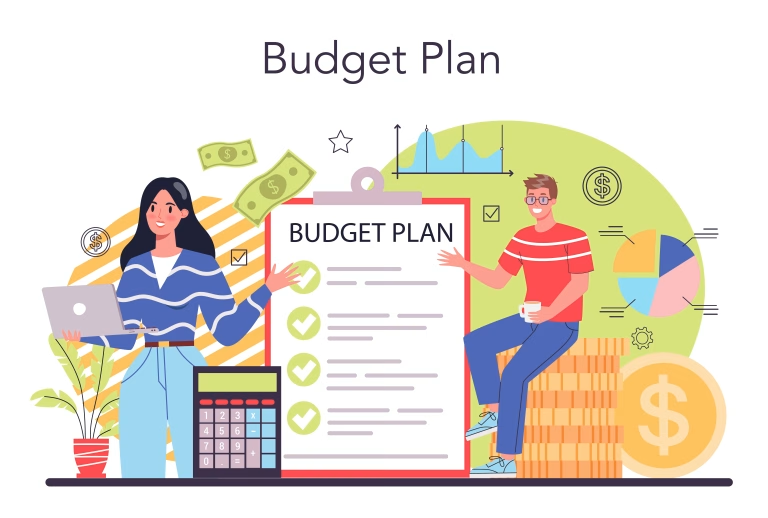
Separating money helps you create control. Even if your income is unstable, dividing your money into categories makes it stable in structure. For example, food money, rent money, business money, and savings money should all have their own spaces. This separation helps you see your financial picture clearly and prevents money from disappearing unknowingly.
This structure gives direction to your money, which helps you manage it better.
The Danger of Spending Emotionally When Income Is Unstable
When your income comes irregularly, you may feel stressed or uncertain. This stress can lead to emotional spending — buying things to feel better temporarily. Many people experience this without realizing it. They buy new clothes, gadgets, perfumes, or unnecessary food the moment money arrives because they feel they “deserve it.”
The problem is that emotional spending leaves you broke faster. Instead of using money logically, you use it emotionally. This habit is a silent enemy to people with unstable income. Learning to separate emotion from money is essential. You need to create a rule that emotions don’t decide how your money is used. Structure does.
Understanding Needs vs Wants in the Ghanaian Context
In Ghana, the difference between a need and a want can become blurred due to social pressure, expectations from family, and cultural norms. You might feel obligated to give money to people because “you can’t say no.” You might spend on ceremonies, outings, or gifts because you don’t want to disappoint others.
But when you have unstable income, the ability to draw boundaries is essential. Needs should always come before wants. Food, transport, electricity, health, school fees—these are needs. Eating out every weekend, buying new clothes frequently, and doing giveaways you cannot afford are wants.
The clearer you become about your needs and wants, the faster your money stabilizes.
Why You Should Build Multiple Streams of Income in Ghana
Having one unstable income source keeps you vulnerable. But having two or three—even small ones—gives your money stability. In Ghana today, many people survive not because one job pays well, but because they combine small streams.
Examples:
A teacher who sells pastries
A barber who sells hair products
A student who runs errands for people
A tailor who sells fabrics
A driver who rents out his spare time for deliveries
Multiple income streams give you breathing space. When one source slows down, another may be active. This reduces financial pressure and allows you to save money more consistently.
Learning to Live Below Your Lowest Income Level
This is one of the most powerful money strategies, especially for people with unstable income. Instead of living based on your highest earning month, structure your lifestyle around your lowest.
If you sometimes earn 1,500 cedis, sometimes 800, and sometimes 400, choose a lifestyle that is comfortable on 400–600. That way, when you earn more, you save the difference instead of upgrading your lifestyle temporarily.
Many people feel constantly broke because they live according to their best months instead of their average or worst months. This creates emotional pressure and money anxiety. Living below your lowest income brings stability because it automatically creates savings in high-income months.
Why Money Mindset Matters More Than You Think
Your mindset controls how you treat money. If you fear money, avoid planning, or think savings are impossible, you will stay stuck in financial survival. Many Ghanaians believe you must be rich to save, but research shows the opposite: people become financially secure because they save, not because they earn a lot.
A healthy money mindset is grounded in discipline, patience, and long-term thinking. When your mindset sees money as something to manage—not chase—you begin making intentional choices that protect your financial future.
Conclusion
Saving money in Ghana when your income is unstable is not impossible. It simply requires structure, awareness, and consistency. Money becomes stable when you become disciplined. Your income may not come at the same time every month, but your decisions can be steady.
When you understand your money flow, pay yourself first, create separation for your expenses, avoid emotional spending, build multiple income streams, and control lifestyle inflation, you begin to see your money stretch. You become more confident, more in control, and more secure—even in a country where prices rise and income doesn’t keep up.
Stability doesn’t start with the amount you earn. It starts with how you manage the money you have. Even with unpredictable income, you can build stability, save consistently, and grow financially stronger—one small decision at a time.