
Plan your month at the end of a month and wondered where all the time went?
Many people start each month with good intentions. They want to be more productive, achieve important goals, improve their finances, grow their careers, or develop better habits. However, without a clear plan, days quickly turn into weeks, and the month ends with little progress.
The problem is not usually a lack of ambition. The problem is often a lack of structure.
Successful people do not leave their months to chance. They create plans that help them stay focused on what matters most. By planning your month properly, you can reduce stress, manage your time better, and make consistent progress toward your goals.
Monthly planning does not require complicated systems or expensive productivity tools. What matters most is having a clear direction and taking intentional action.
In this guide, you will learn how to plan your month effectively so that you can achieve better results and make the most of your time.
Why Monthly Planning Matters
Many people plan their days and weeks but forget to plan their month.
A monthly plan provides a bigger picture. It helps you see important priorities, upcoming deadlines, major projects, and personal goals all at once.
When you plan your month, you are less likely to waste time reacting to everything that happens around you.
Monthly planning helps you:
- Stay focused on important goals
- Improve productivity
- Reduce stress and overwhelm
- Manage time more effectively
- Track progress consistently
- Build better habits
- Make better decisions
Without a monthly plan, it becomes easy to spend time on activities that do not contribute to your long-term goals.
Start by Reviewing the Previous Month
Before planning a new month, take time to review the previous one.
Ask yourself:
- What went well?
- What goals did I achieve?
- What challenges did I face?
- What habits helped me?
- What distracted me?
- What should I improve?
This reflection helps you learn from experience.
Many people make the mistake of repeating the same problems every month because they never stop to evaluate what happened.
Reviewing your previous month allows you to carry forward successful habits and correct mistakes before they continue affecting your progress.
Identify Your Most Important Goals
A productive month starts with clear goals.
Think about what you want to accomplish before the month ends.
Your goals may involve:
- Career development
- Personal finance
- Health and fitness
- Education
- Business growth
- Relationships
- Personal development
Avoid setting too many goals at once.
Trying to focus on everything often leads to accomplishing very little.
Instead, choose three to five important goals that will have the greatest impact on your life.
For example:
- Complete an online course
- Save a specific amount of money
- Apply for ten jobs
- Exercise consistently
- Finish a major work project
Clear goals provide direction and help you focus your energy where it matters most. Career & Success
Break Large Goals Into Smaller Tasks
Big goals can feel overwhelming.
One reason people abandon goals is because they seem too large or complicated.
The solution is to break each goal into smaller, manageable tasks.
For example:
Instead of:
“Learn Digital Marketing”
Break it into:
- Complete Module 1
- Complete Module 2
- Practice social media marketing
- Study SEO basics
- Complete final assessment
Instead of:
“Save Money”
Break it into:
- Create a budget
- Track expenses weekly
- Reduce unnecessary spending
- Save a fixed amount each week
Smaller tasks make progress easier and help you stay motivated.
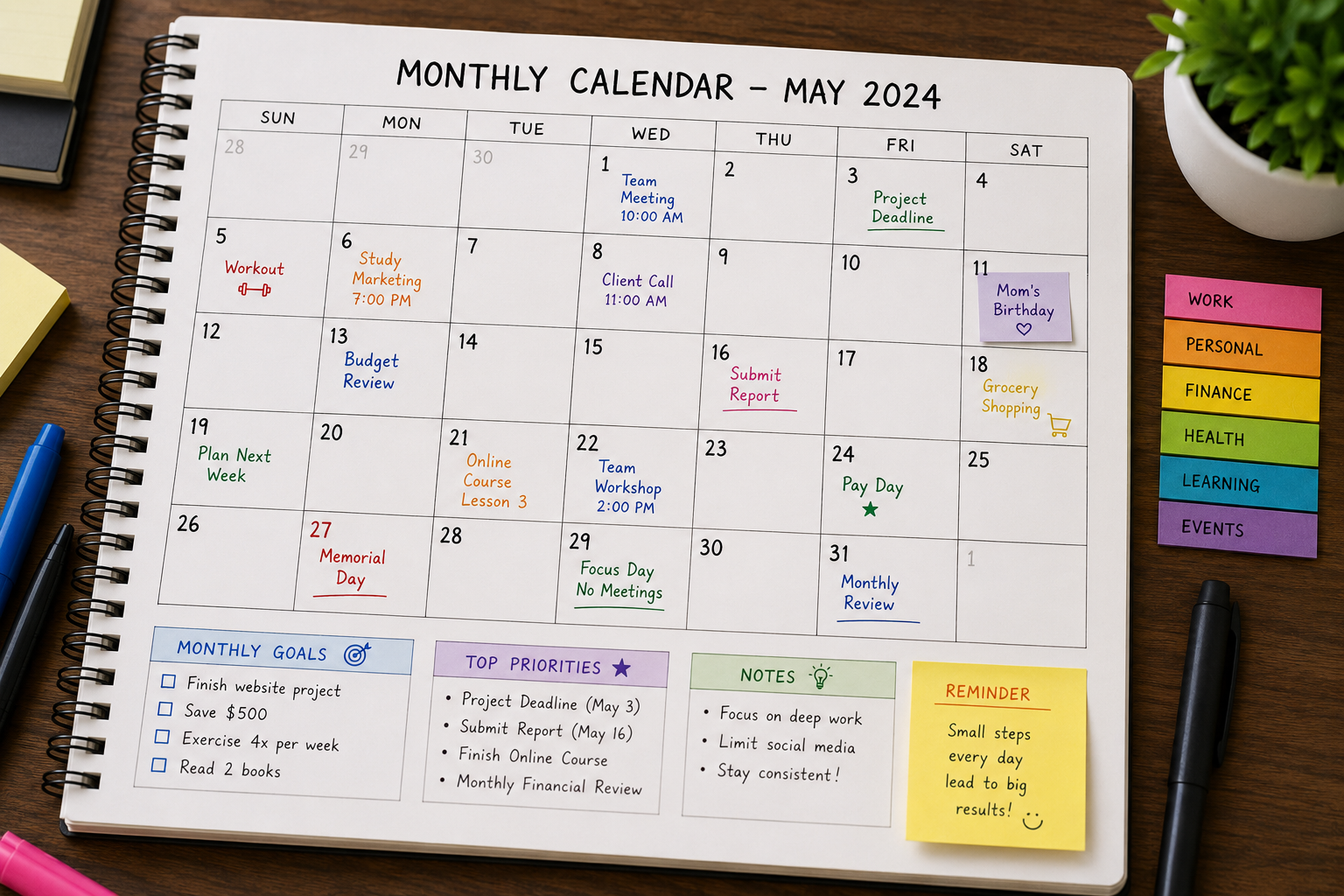
Use a Monthly Calendar
A calendar is one of the most useful monthly planning tools.
Whether you use a digital calendar, planner, or notebook, record important dates such as:
- Meetings
- Appointments
- Deadlines
- Events
- Birthdays
- Bill payments
- Project milestones
Seeing important dates visually helps you avoid surprises and plan your workload more effectively.
Your calendar becomes the foundation of your monthly plan.
Schedule Your Priorities First
Many people fill their schedules with low-priority activities and then struggle to find time for important goals.
Reverse the process.
Schedule important activities first.
These may include:
- Work projects
- Study sessions
- Exercise
- Savings activities
- Business tasks
- Professional development
Treat these commitments seriously.
If something is important enough to be a goal, it should have a place in your calendar.
Create Weekly Focus Areas
While monthly goals provide direction, weekly focus areas help you stay organized.
At the beginning of each week, identify your most important priorities.
For example:
Week 1
- Update CV
- Research job opportunities
- Create budget
Week 2
- Complete online course lessons
- Submit job applications
- Review finances
Week 3
- Attend networking events
- Exercise consistently
- Work on personal projects
Week 4
- Review progress
- Complete unfinished tasks
- Plan next month
Weekly focus areas prevent overwhelm and keep your monthly goals manageable.
Build Time for Habits
Monthly success is often built through daily habits.
Habits such as:
- Reading
- Exercising
- Saving money
- Learning new skills
- Planning your day
- Journaling
can create significant long-term results.
When planning your month, include habits you want to maintain.
Small daily actions often produce larger results than occasional bursts of motivation.
Leave Room for Flexibility
Life rarely goes exactly as planned.
Unexpected opportunities, emergencies, and changes can affect your schedule.
A good monthly plan should be flexible enough to adapt when necessary.
Avoid scheduling every minute of your time.
Leave space for:
- Unexpected responsibilities
- Rest and recovery
- Family commitments
- Personal needs
Flexibility helps reduce frustration when plans change.
Reduce Distractions
Even the best monthly plan can fail if distractions constantly interrupt your progress.
Common distractions include:
- Excessive social media use
- Constant notifications
- Unnecessary meetings
- Procrastination
- Poor time management
Identify the distractions that affect you most and develop strategies to manage them.
For example:
- Turn off notifications while working.
- Set limits on social media use.
- Work in focused time blocks.
- Create a dedicated workspace.
Protecting your attention can significantly improve productivity.

Track Your Progress Throughout the Month
Planning alone is not enough.
You also need to monitor your progress.
At the end of each week, review:
- What was completed
- What remains unfinished
- What challenges arose
- What adjustments are needed
Progress tracking helps you stay accountable and make improvements before the month ends.
It also provides motivation because you can see how far you have come.
Prioritize Rest and Balance
Productivity is not about working constantly.
Rest is an important part of long-term success.
A balanced monthly plan should include:
- Sleep
- Exercise
- Family time
- Recreation
- Personal reflection
Without proper rest, productivity often declines and burnout becomes more likely.
The goal is sustainable progress, not exhaustion.
Conduct a Monthly Review
At the end of the month, review your results.
Ask yourself:
- Which goals were achieved?
- What obstacles appeared?
- What habits worked well?
- What should change next month?
A monthly review helps you continuously improve your planning process.
Success comes from learning, adapting, and refining your approach over time.
Common Monthly Planning Mistakes to Avoid
Some common mistakes include:
- Setting too many goals
- Ignoring deadlines
- Overloading your schedule
- Failing to track progress
- Neglecting rest
- Not reviewing previous months
- Allowing distractions to dominate your time
Avoiding these mistakes can significantly improve your results.
Final Thoughts
Learning how to plan your month is one of the most valuable productivity skills you can develop.
A clear monthly plan helps you stay focused, organized, and intentional with your time. Instead of reacting to events as they happen, you create a roadmap that guides your actions throughout the month.
Remember that effective planning does not require perfection. It requires consistency.
Review your previous month, set meaningful goals, break them into manageable tasks, schedule your priorities, track your progress, and remain flexible when necessary.
When you plan your month with purpose, you increase your chances of achieving better results in every area of your life.
The most productive months rarely happen by accident. They are usually the result of thoughtful planning and consistent action.