

Procastinating is the thief of time and take action you know what needs to be done, but instead of starting, you find yourself scrolling through social media, watching videos, checking messages, cleaning your room, or doing anything except the task that actually matters.
At first, procrastination may seem harmless. You tell yourself you’ll do it later. But later becomes tomorrow, tomorrow becomes next week, and before you know it, important goals remain unfinished.
The frustrating part is that procrastination is rarely caused by laziness. Most people who procrastinate genuinely want to achieve their goals. The problem is that something keeps getting in the way of action.
Whether you want to improve your career, start a business, lose weight, save money, study for exams, or complete a personal project, learning how to stop procrastinating can transform your life.
The good news is that procrastination is a habit, and like any habit, it can be changed.
Understanding Why We Procrastinate
Before you can stop procrastinating, you need to understand why it happens.
Many people believe procrastination is caused by poor time management, but that is only part of the problem.
Common reasons include:
- Fear of failure
- Fear of success
- Perfectionism
- Feeling overwhelmed
- Lack of motivation
- Lack of clarity
- Distractions
- Low confidence
When a task feels difficult, uncomfortable, or uncertain, your brain often looks for easier and more enjoyable alternatives.
Understanding the root cause helps you address the real problem rather than simply blaming yourself.
Stop Waiting for Motivation
One of the biggest mistakes people make is waiting to feel motivated before taking action.
They tell themselves:
- “I’ll start when I feel ready.”
- “I’ll begin when I’m motivated.”
- “I’ll do it when I’m in the mood.”
The truth is that motivation often comes after action, not before.
Many successful people do not feel motivated every day. They simply take action anyway.
Once you start working, momentum begins to build, and motivation often follows.
Action creates motivation far more reliably than waiting for motivation to appear.
Make the Task Smaller
Large goals can feel intimidating.
For example:
- Write a book
- Start a business
- Build a website
- Learn a new skill
- Lose weight
These goals sound huge.
Instead of focusing on the entire goal, focus on the next small step.
For example:
Instead of:
“Write a book.”
Start with:
“Write one paragraph.”
Instead of:
“Build a business.”
Start with:
“Research one business idea.”
Small tasks feel easier to begin, and beginning is often the hardest part.
Use the Five-Minute Rule
A powerful technique for overcoming procrastination is the Five-Minute Rule.
Tell yourself:
“I only need to work on this for five minutes.”
Most people can handle five minutes.
Once you begin, you often continue far beyond the initial five minutes because starting removes much of the resistance.
The goal is not to finish everything immediately.
The goal is simply to get started.
Eliminate Distractions
Modern life is full of distractions.
Common productivity killers include:
- Social media
- Notifications
- Text messages
- Television
- YouTube
- Unnecessary internet browsing
If you constantly interrupt your focus, tasks take longer and become more frustrating.
Try:
- Turning off notifications
- Putting your phone away
- Closing unnecessary tabs
- Creating a quiet workspace
- Using website blockers
The fewer distractions around you, the easier it becomes to take action.
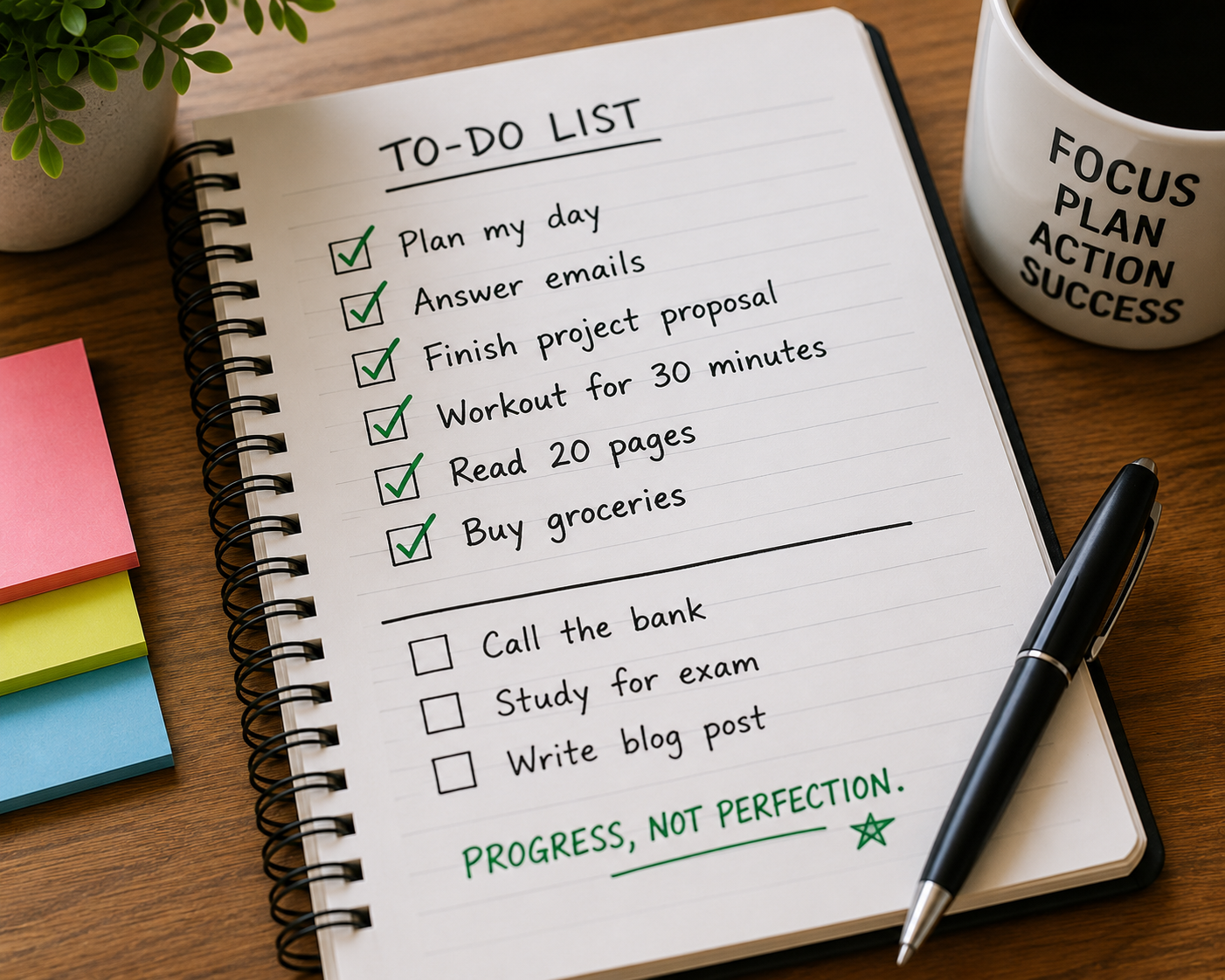
Focus on Progress, Not Perfection
Perfectionism is a hidden form of procrastination.
Many people delay action because they want everything to be perfect before they begin.
They want:
- The perfect plan
- The perfect timing
- The perfect skills
- The perfect opportunity
Unfortunately, perfection rarely exists.
Progress is more important than perfection.
An imperfect task completed is usually better than a perfect task that never starts.
Give yourself permission to begin before everything feels perfect.
Create Clear Daily Priorities
When everything feels important, it becomes difficult to know where to start.
Each day, identify your most important tasks.
Ask yourself:
“What is the one thing I need to complete today?”
Focus on completing that task before moving to less important activities.
Clear priorities reduce decision fatigue and make action easier.
Use Deadlines Wisely
Many people work best when a deadline exists.
Without deadlines, tasks can continue indefinitely.
Create personal deadlines for important goals.
For example:
- Finish CV update by Friday
- Complete online course by the end of the month
- Publish blog article by Wednesday
- Save a specific amount by month-end
Deadlines create urgency and encourage action.
Build a Routine
Relying on motivation alone is unreliable.
A routine helps you take action consistently even when you do not feel like it.
For example:
- Exercise at the same time daily
- Study every evening
- Work on your business every morning
- Write for 30 minutes each day
When action becomes part of your routine, you spend less energy deciding whether to start.
Reward Yourself
Positive reinforcement can help build productive habits.
After completing important tasks, reward yourself.
Examples include:
- Taking a short break
- Watching a favorite show
- Going for a walk
- Enjoying a favorite snack
Rewards create positive associations with productivity and help maintain motivation.
Stop Overthinking
Many people spend more time thinking about tasks than actually doing them.
They analyze every possibility, worry about every outcome, and create unnecessary stress.
While planning is useful, excessive planning often becomes another form of procrastination.
Sometimes the best solution is simply:
Start.
You do not need all the answers before taking the first step.
Clarity often comes through action.
Learn to Manage Fear
Fear is one of the biggest causes of procrastination.
You may fear:
- Failure
- Rejection
- Criticism
- Making mistakes
- Looking foolish
These fears are normal.
However, allowing fear to control your actions prevents growth.
Remember:
Every successful person has failed.
Every expert was once a beginner.
Every achievement started with someone taking action despite uncertainty.
Courage is not the absence of fear.
Courage is acting despite fear.

Surround Yourself With Action-Takers
The people around you influence your behavior.
If you spend time with motivated, disciplined, and goal-oriented individuals, their habits can inspire you.
Seek people who:
- Encourage growth
- Hold themselves accountable
- Take action consistently
- Support your goals
Positive environments often make positive behavior easier.
Track Your Progress
Progress creates motivation.
Keep track of:
- Tasks completed
- Goals achieved
- Habits maintained
- Milestones reached
Even small wins can boost confidence and encourage continued action.
Looking back at your progress reminds you that your efforts are producing results.

Forgive Yourself and Start Again
Everyone procrastinates occasionally.
The key is not to remain stuck.
If you waste a day, do not waste a week.
If you waste a week, do not waste a month.
Forgive yourself quickly and return to action.
The goal is consistency, not perfection.
Final Thoughts
Learning how to stop procrastinating and take action can change every area of your life.
Success rarely comes from having perfect ideas, perfect plans, or perfect motivation. It comes from consistently taking action, even when you do not feel ready.
Start small. Focus on progress. Eliminate distractions. Build routines. Stop waiting for the perfect moment.
Remember that every major achievement begins with a single step.
You do not need to complete everything today.
You simply need to start.
The sooner you take action, the sooner you begin creating the results you want.