

How to build Better daily habits more often, it is the result of small actions repeated consistently over time. The habits you practice every day shape your health, finances, career, productivity, relationships, and overall quality of life.
Whether you realize it or not, your daily habits are creating your future.
Good habits can help you become healthier, more productive, more confident, and more successful. Bad habits can slowly hold you back, even when you have good intentions.
The challenge is that building better habits is not always easy. Many people start with enthusiasm but struggle to stay consistent after a few days or weeks.
The good news is that successful habits are not built through motivation alone. They are built through simple systems, consistency, and patience.
If you want to improve your life, one of the best places to start is improving your daily habits.
Why Daily Habits Matter
Your habits influence your results more than occasional actions.
For example:
- Reading 10 pages daily can lead to several books completed each year.
- Saving a small amount regularly can grow into significant savings.
- Exercising consistently improves health over time.
- Learning a skill for a few minutes each day creates expertise.
Small actions may seem insignificant in the moment, but their long-term impact can be enormous.
Daily habits create momentum and help you move closer to your goals.
Start Small
One of the biggest mistakes people make is trying to change everything at once.
They decide to:
- Wake up at 5 AM
- Exercise every day
- Read a book every week
- Eat perfectly healthy
- Learn a new skill
While these goals are admirable, attempting too many changes at once often leads to burnout.
Start with one habit.
Make it small and manageable.
For example:
- Read for 5 minutes
- Walk for 10 minutes
- Save a small amount daily
- Drink an extra glass of water
Small habits are easier to maintain and build confidence.
Focus on Consistency Over Perfection
Many people quit because they miss a day.
The truth is that perfection is not required.
What matters is consistency.
If you miss one day:
- Do not quit.
- Do not criticize yourself.
- Simply return to the habit the next day.
A habit becomes powerful when it survives occasional setbacks.
Progress is more important than perfection.
Connect New Habits to Existing Habits
One effective strategy is habit stacking.
This means attaching a new habit to something you already do consistently.
Examples:
- After brushing your teeth, read for 5 minutes.
- After breakfast, review your goals.
- After work, exercise for 15 minutes.
- Before bed, write in a journal.
Linking habits together makes them easier to remember and maintain.
Create a Supportive Environment
Your environment influences your behavior.
Make good habits easier.
Examples:
- Keep books where you can see them.
- Prepare workout clothes in advance.
- Place healthy snacks within reach.
- Remove distractions from your workspace.
A well-designed environment encourages positive habits naturally.
Identify and Remove Bad Habit Triggers
Bad habits often have triggers.
Examples:
- Stress leading to overeating
- Boredom leading to excessive social media use
- Fatigue leading to procrastination
Pay attention to situations that trigger unwanted behaviors.
Once identified, you can create healthier alternatives.
Awareness is the first step toward change.

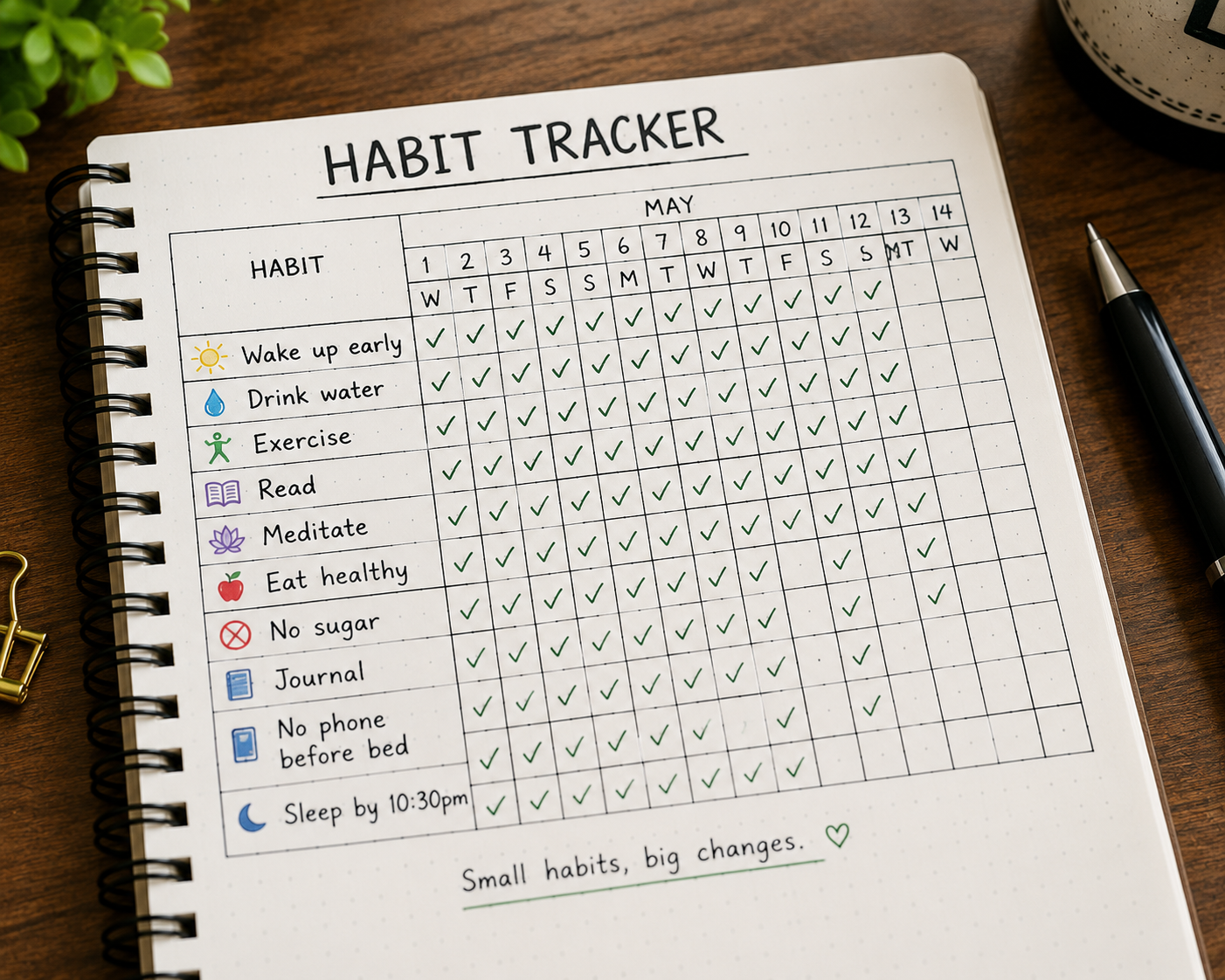
Track Your Progress
Tracking habits can increase motivation.
You can use:
- A notebook
- A habit tracker
- A calendar
- A mobile app
Each day you complete your habit, mark it.
Seeing progress visually can encourage consistency.
It also provides accountability.
Build Routines Instead of Relying on Motivation
Motivation changes daily.
Some days you will feel energized.
Other days you will not.
This is why routines matter.
When a habit becomes part of your routine, you do not need to decide whether to do it.
You simply follow the routine.
Routines reduce decision fatigue and increase consistency.
Reward Positive Behavior
Positive reinforcement can help strengthen habits.
After completing a habit, reward yourself.
Examples:
- Take a short break
- Enjoy a favorite activity
- Celebrate a milestone
- Share progress with a friend
Rewards help your brain associate positive feelings with the habit.
Be Patient
Many people expect immediate results.
However, habits require time to develop.
Some changes may be noticeable quickly.
Others may take weeks or months.
Focus on the process.
Trust that consistent effort will produce results over time.
Patience is essential for long-term success.
Common Habits That Improve Life
If you are unsure where to start, consider habits such as:
- Reading daily
- Exercising regularly
- Drinking enough water
- Planning your day
- Tracking expenses
- Learning a new skill
- Practicing gratitude
- Limiting social media
- Getting enough sleep
- Reviewing personal goals
Choose habits that align with the life you want to build.
What to Do When You Lose Motivation
Everyone experiences periods of low motivation.
When this happens:
- Reduce the habit instead of quitting.
- Focus on showing up.
- Remember your reason for starting.
- Review your progress.
- Make the habit easier temporarily.
The goal is to maintain momentum.
Even small actions help keep the habit alive.
Signs Your Habits Are Working
You may notice:
- Increased productivity
- Better health
- Improved focus
- Greater confidence
- More consistency
- Better financial decisions
- Reduced stress
- Stronger self-discipline
These benefits often appear gradually.
Keep going.
Final Thoughts
Building better daily habits is one of the most effective ways to improve your life.
You do not need dramatic changes or perfect motivation. You simply need small actions repeated consistently over time.
Start small, focus on consistency, track your progress, and create routines that support your goals.
Remember that every positive habit is an investment in your future.
The habits you practice today will shape the person you become tomorrow.