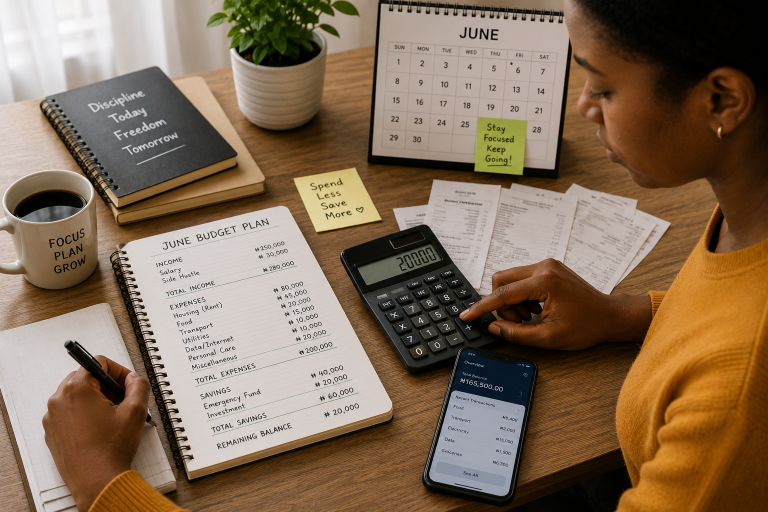

Let’s be honest: most of us have tried budgeting and most of us have failed to stick with it. We start with good intentions. We download an app or open an Excel sheet. We plan out where every cedi or dollar should go. But somewhere between groceries, fuel, and unexpected expenses, the plan goes off-track.
Why does that happen?
Because budgeting isn’t the full picture. It’s a tool, not the goal. To truly gain control of your finances, you need more than just a budget you need a financial freedom plan.
This article will walk you through why a financial freedom plan is more powerful than a budget and how you can start building one today. We’ll explore the 6 key aspects of sales management applied to your personal finances to help you escape the paycheck-to-paycheck cycle and build a life of freedom.
1. Planning: Know Where You’re Going
Budgeting is usually about the present. You look at how much you make and how much you spend. A financial freedom plan looks beyond that it asks:
- What do you want your money to do for you in 5, 10, or 20 years?
- What does freedom mean to you no debt, early retirement, traveling, starting a business?
You can’t build wealth without a clear financial vision. That vision becomes your long-term plan. It helps you make short-term sacrifices with long-term rewards in mind.
Start with questions like:
- How much do I want to have saved by age 40?
- Do I want to own my own home or stay flexible with renting?
- Can I build an emergency fund or passive income?
When you have a plan, you stop making random financial decisions and start making strategic ones.
Tip: Write down your top 3 long-term money goals. These are your targets, and your budget should support reaching them.
2. Organizing: Build Systems That Work for You
Sales managers don’t just hope their team will hit targets. They organize systems to track performance, assign tasks, and follow up. You should do the same with your finances.
A budget often fails because it’s too rigid or not updated regularly. A financial freedom plan involves organizing your money flow into different categories that reflect your values:
- Fixed expenses (rent, bills)
- Needs (food, transport)
- Wants (entertainment, gadgets)
- Savings & investments
You can automate these systems using mobile money wallets, bank accounts, or envelope methods. When your money is well-organized, you’re more likely to stick to your goals.
Bonus Tip: Have a “Wealth Account” a separate savings or investment fund where a fixed percentage (even 5–10%) of your income goes every month.
3. Directing: Give Every Cedi a Purpose
In sales management, direction is everything. Without it, salespeople don’t know what to do. The same goes for money. If you don’t direct your money, it will disappear.
A financial freedom plan helps you assign roles to every amount you earn.
- GHS 50 = Fuel
- GHS 150 = Groceries
- GHS 200 = Savings
- GHS 300 = Investment
This is not just budgeting. This is strategic direction. You’re telling your money where to go before it leaves your hands. You’re not just tracking—it’s intentional management.
4. Controlling: Track Progress and Adjust
A great sales manager doesn’t just give goals—he checks in regularly. Likewise, your financial freedom plan needs monitoring.
Ask yourself each month:
- Did I save what I planned to?
- Where did I overspend?
- What unexpected costs came up?
Controlling doesn’t mean restricting—it means staying informed. It means knowing when to adjust your plan to fit your current life stage.
Example: Maybe in one month you earn extra income from a side gig. Instead of spending it randomly, your plan should help you direct that money to a goal—like paying off debt faster.
Without regular check-ins, even a perfect financial plan can collapse. A good rule is to review your finances weekly and do a deeper check monthly.
5. Motivating: Find Your Why
One of the biggest roles of a sales manager is motivation. The same principle applies in personal finance.
Budgeting feels like a chore. But a financial freedom plan gives you something to look forward to.
- You’re not just cutting expenses—you’re funding your dream business.
- You’re not skipping takeout—you’re building a freedom fund.
- You’re not avoiding travel—you’re planning to travel debt-free.
The deeper your “why”, the easier it is to stay disciplined. Motivation helps you stay on track even when things get tough—when unexpected bills show up or income drops.
Tip: Print a picture of your dream goal—house, vacation, savings target—and put it where you see it daily. That visual reminder can keep your mind focused.
6. Evaluating: Keep Growing Financially
Sales managers look at performance and ask, “How can we do better next month?” You should do the same with your money.
Evaluate your financial growth every quarter:
- Are your savings increasing?
- Are you reducing debt?
- Is your investment knowledge growing?
This isn’t just about numbers—it’s about your mindset. A financial freedom plan includes learning. Read financial books. Follow money blogs. Attend webinars. Learn how compound interest works. Understand passive income streams. Every new skill adds value to your long-term plan.
Why Budgeting Isn’t Enough
Let’s summarize:
A budget is like a calendar. It tells you where you are today and what your schedule looks like.
A financial freedom plan is like a map. It shows where you want to go and how to get there.
You need both—but the map is what changes your life.
If you only focus on budgeting, you may stay stuck in the cycle of earning and spending, without building anything. But when you shift to planning for financial freedom, your money starts working for you, not just paying for your needs.
Conclusion: Start Building Your Financial Freedom Plan Today
You don’t need to be rich to build a financial freedom plan. You just need to be intentional. Even small steps matter. Start today:
- Write down your top 3 long-term money goals
- Break your income into clear categories
- Set up a system to track and automate
- Review weekly and adjust monthly
- Keep learning books, podcasts, blogs
- Stay motivated with your deeper why
Remember, budgeting is the start, but a financial freedom plan is the finish line. Stop surviving—and start building a future that gives you choices, peace of mind, and lasting freedom.