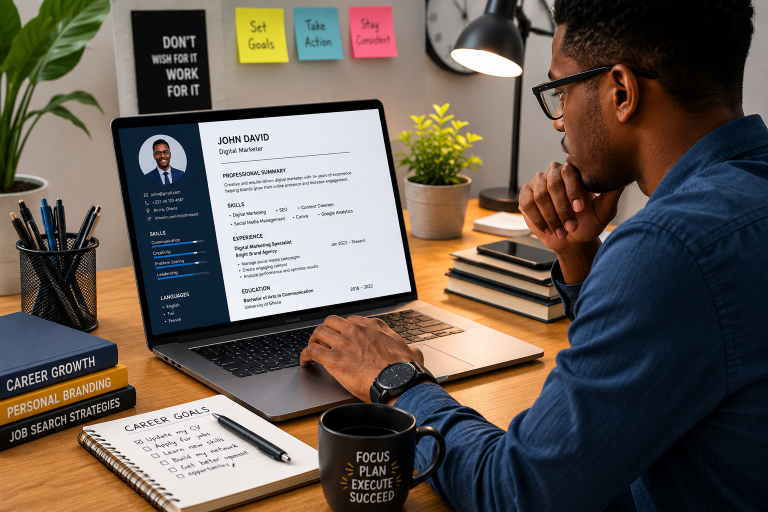
The workplace is changing faster than ever before. New technologies, changing business needs, and increasing competition mean that employers are constantly looking for people who can adapt, learn, and contribute value.
Having a degree or certificate is important, but it is no longer enough on its own. Employers want individuals who possess practical skills that can solve problems, improve efficiency, and help organizations achieve their goals.
This is why learning new skills has become one of the smartest investments you can make in your career.
Whether you are a student, graduate, job seeker, entrepreneur, or working professional, the right skills can increase your confidence, improve your employability, and open doors to better opportunities.
The good news is that you do not need to learn everything. The key is to focus on skills that are valuable, relevant, and useful across different industries.
In this article, we will explore some of the best skills to learn for career growth and why they matter in today’s job market.
Why Learning New Skills Matters
Many people remain stuck in their careers because they stop learning.
The most successful professionals understand that career growth is a continuous journey. They regularly improve their knowledge, develop new abilities, and adapt to changing workplace demands.
Learning new skills can help you:
- Become more valuable to employers
- Increase your earning potential
- Improve job security
- Qualify for promotions
- Explore new career opportunities
- Build confidence in your abilities
- Stay competitive in your industry
The more useful skills you possess, the more opportunities you create for yourself.
Communication Skills
Communication is one of the most important skills for career growth.
No matter your profession, your ability to communicate effectively can influence your success. Employers value people who can express ideas clearly, listen carefully, and interact professionally with colleagues, customers, and clients.
Good communication includes:
- Speaking clearly
- Active listening
- Professional writing
- Public speaking
- Presentation skills
- Interpersonal communication
Strong communicators often stand out because they can build relationships, resolve conflicts, and work effectively with others.
Digital Literacy
Technology plays a major role in almost every workplace today.
Even jobs that are not considered technical often require basic digital skills.
Digital literacy includes understanding how to use:
- Computers
- Email systems
- Microsoft Office
- Google Workspace
- Online collaboration tools
- Video conferencing platforms
- Cloud storage systems
Employers increasingly expect workers to be comfortable using technology in their daily tasks.
Improving your digital literacy can make you more productive and adaptable in modern workplaces.
Problem-Solving Skills
Organizations value people who can identify problems and find practical solutions.
Problem-solving involves:
- Analyzing situations
- Identifying root causes
- Evaluating options
- Making informed decisions
- Implementing effective solutions
Employees who solve problems efficiently often become valuable team members and are more likely to receive leadership opportunities.
Instead of always bringing problems to managers, successful professionals learn how to bring solutions as well.

Time Management
Time is one of the most valuable resources in any workplace.
Employees who manage their time effectively often achieve more, experience less stress, and maintain higher productivity levels.
Good time management includes:
- Prioritizing tasks
- Meeting deadlines
- Planning workloads
- Avoiding procrastination
- Staying organized
People who consistently deliver work on time build trust and reliability.
Leadership Skills
Leadership is not only for managers.
Leadership skills can benefit employees at every level of an organization.
Strong leadership involves:
- Taking initiative
- Motivating others
- Solving problems
- Making decisions
- Managing responsibilities
- Supporting team success
Even if you are not currently in a leadership position, developing leadership abilities can prepare you for future opportunities.
Critical Thinking
Critical thinking is the ability to evaluate information carefully and make sound judgments.
In today’s workplace, professionals are constantly faced with decisions that require thoughtful analysis.
Critical thinkers:
- Ask questions
- Evaluate evidence
- Consider alternatives
- Identify risks
- Make informed decisions
Employers appreciate individuals who can think independently rather than simply follow instructions without understanding.
Customer Service Skills
Customer service is valuable in many industries, not just retail.
Every organization serves someone, whether it is customers, clients, patients, students, or internal stakeholders.
Good customer service skills include:
- Patience
- Empathy
- Communication
- Problem-solving
- Professionalism
People who can build positive relationships with customers often become valuable assets to their organizations.

Project Management
Project management is becoming increasingly important across many professions.
This skill involves:
- Planning tasks
- Organizing resources
- Managing timelines
- Coordinating teams
- Monitoring progress
You do not need to become a certified project manager immediately. Learning basic project management principles can improve your effectiveness in almost any role.
Employers appreciate people who can manage projects from start to finish.
Data Analysis Skills
Data is influencing business decisions in every industry.
Organizations collect large amounts of information and need people who can understand and interpret it.
Basic data analysis skills may include:
- Using spreadsheets
- Creating reports
- Understanding trends
- Interpreting data
- Making data-driven decisions
Even a basic understanding of data can make you more valuable in today’s job market.
Emotional Intelligence
Technical skills are important, but emotional intelligence is equally valuable.
Emotional intelligence refers to the ability to understand and manage emotions while interacting effectively with others.
This includes:
- Self-awareness
- Self-control
- Empathy
- Relationship management
- Conflict resolution
People with high emotional intelligence often work better with teams, handle pressure more effectively, and build stronger professional relationships.
Networking Skills
Career growth often depends on who knows your abilities and professional value.
Networking is not simply collecting contacts. It is about building meaningful professional relationships.
Networking can help you:
- Learn about opportunities
- Gain career advice
- Discover industry trends
- Find mentors
- Build your professional reputation
Strong professional networks often create opportunities that job boards cannot provide.
Digital Marketing Skills
Digital marketing continues to grow as businesses expand their online presence.
Learning digital marketing can create opportunities in various industries.
Useful areas include:
- Social media marketing
- Content marketing
- Search engine optimization (SEO)
- Email marketing
- Online advertising
- Analytics
Even a basic understanding of digital marketing can increase your career opportunities.
Adaptability
The ability to adapt to change has become a critical workplace skill.
Technology, business processes, and customer expectations are constantly evolving.
Adaptable employees:
- Learn quickly
- Accept change
- Remain flexible
- Handle uncertainty
- Adjust to new situations
Adaptability helps professionals remain relevant and successful throughout their careers.
Teamwork and Collaboration
Few jobs are completed entirely alone.
Organizations rely on teams to achieve goals and solve problems.
Strong teamwork skills include:
- Cooperation
- Respect
- Communication
- Accountability
- Reliability
Employees who work well with others often contribute more effectively and build stronger workplace relationships.
Which Skill Should You Learn First?
The best skill to learn depends on your career goals.
If you are a job seeker, focus on communication, digital literacy, CV writing, and interview skills.
If you work in an office environment, project management, time management, leadership, and data analysis may be valuable.
If you are interested in online opportunities, digital marketing, content creation, and social media management may offer significant benefits.
Start with one skill that aligns closely with your career direction and commit to improving it consistently.
Small improvements over time can lead to major career growth.
How to Start Learning New Skills
Learning new skills has become easier than ever.
You can learn through:
- Online courses
- YouTube tutorials
- Professional certifications
- Workshops
- Mentorship
- Books
- Industry blogs
- Practical experience
The most important thing is not how you learn but whether you apply what you learn.
Knowledge becomes valuable when it is put into practice.
Final Thoughts
Career growth rarely happens by accident. It is often the result of continuous learning and personal development.
The most successful professionals are not necessarily the most talented. They are often the people who consistently invest in improving themselves.
By developing skills such as communication, leadership, problem-solving, digital literacy, project management, emotional intelligence, and adaptability, you can increase your value and create more opportunities for your future.
You do not need to master every skill immediately. Start with one area that aligns with your career goals and focus on improving it steadily.
The skills you learn today could become the reason you receive your next job offer, promotion, or career breakthrough tomorrow.