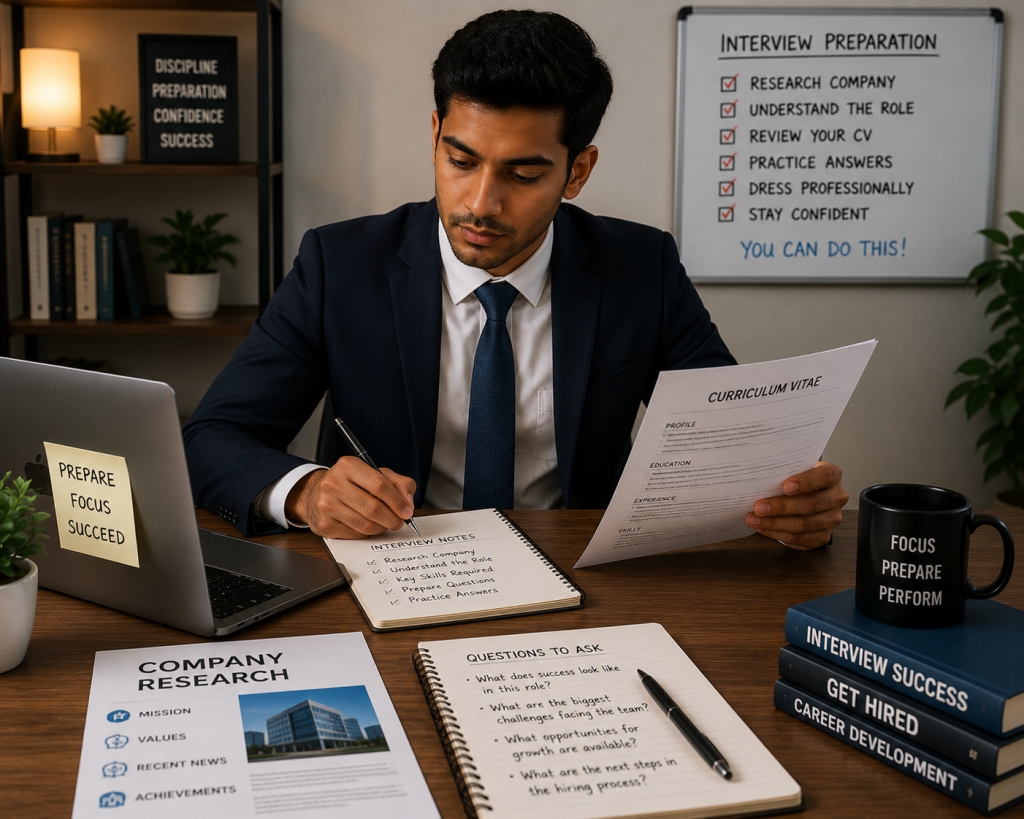
How to prepare for a job interview after spending time searching for jobs, submitting applications, and updating your CV, receiving an interview invitation is a major step toward landing your desired position. However, many candidates fail to perform well during interviews simply because they do not prepare adequately.
Employers use interviews to assess more than your qualifications. They want to understand your communication skills, confidence, attitude, professionalism, problem-solving ability, and whether you are a good fit for the organization.
The good news is that successful interviews are rarely the result of luck. Most strong candidates prepare thoroughly beforehand.
Whether you are attending your first interview or looking to improve your interview performance, this guide will help you prepare effectively and increase your chances of success.
Why Interview Preparation Matters
Interview preparation helps you:
- Build confidence
- Reduce anxiety
- Improve communication
- Understand the role better
- Answer questions effectively
- Make a positive impression
- Increase your chances of getting hired
Employers can often tell when a candidate has prepared well. Preparation demonstrates professionalism, interest, and commitment.
Research the Company
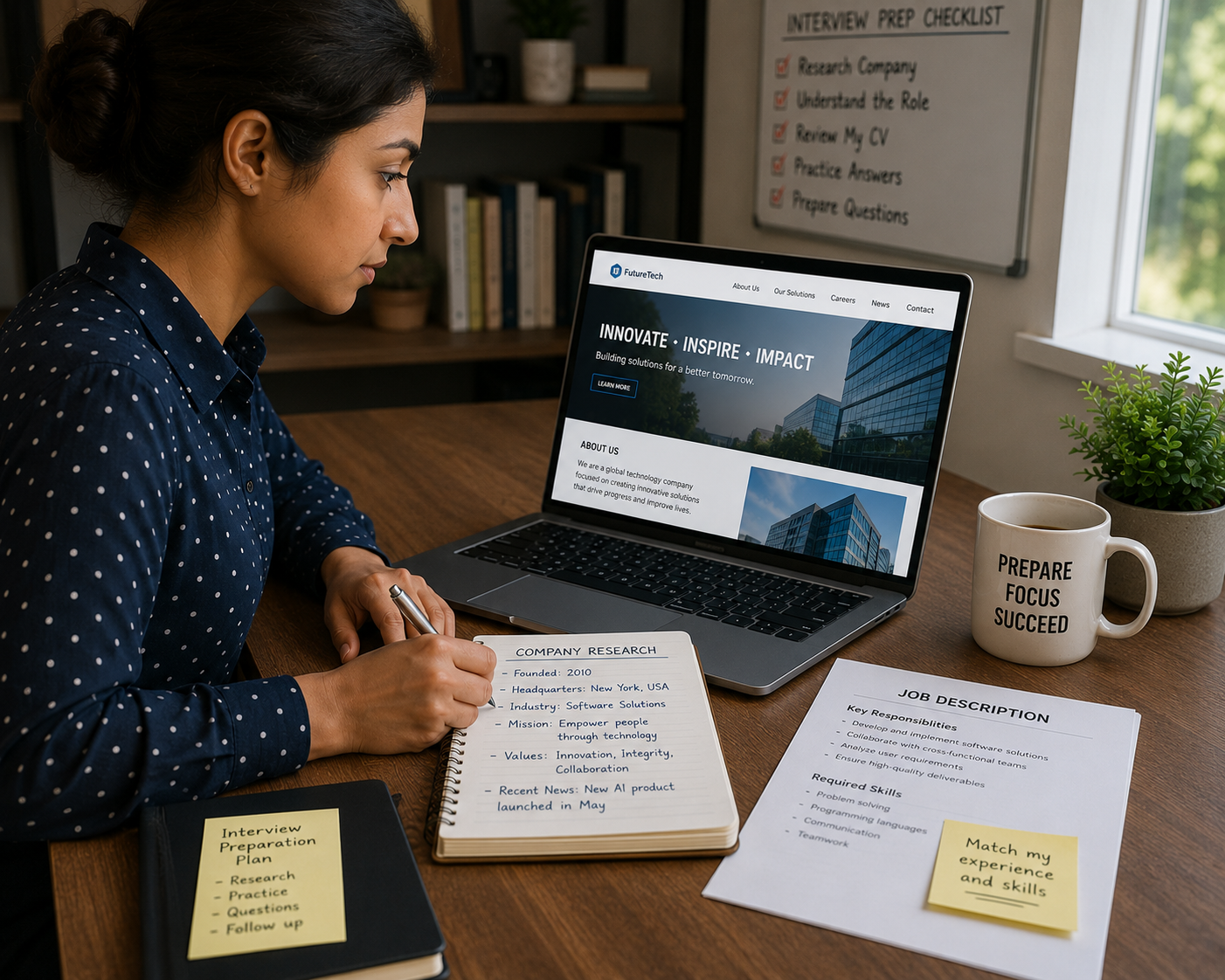
One of the most important interview preparation steps is researching the company.
Before attending the interview, learn about:
- The company’s history
- Products and services
- Mission and values
- Industry position
- Recent achievements
- Company culture
Visit:
- The company website
- Social media pages
- LinkedIn profile
- News articles
Understanding the organization allows you to answer questions more confidently and demonstrate genuine interest.
Understand the Job Description
Many candidates overlook the job description after submitting their application.
Before the interview:
- Read the job description carefully.
- Identify key responsibilities.
- Review required qualifications.
- Understand desired skills.
Think about how your experience matches the employer’s requirements.
Prepare examples that demonstrate your ability to perform the role successfully.
Review Your CV
Interviewers often ask questions based on your CV.
Review:
- Education history
- Work experience
- Skills
- Certifications
- Achievements
Be prepared to explain:
- Previous roles
- Career changes
- Employment gaps
- Major accomplishments
Anything listed on your CV may become part of the discussion.
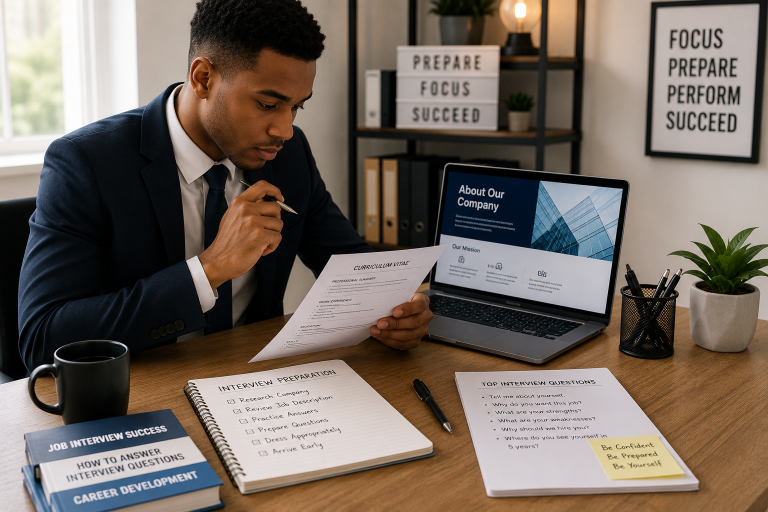
Practice Common Interview Questions
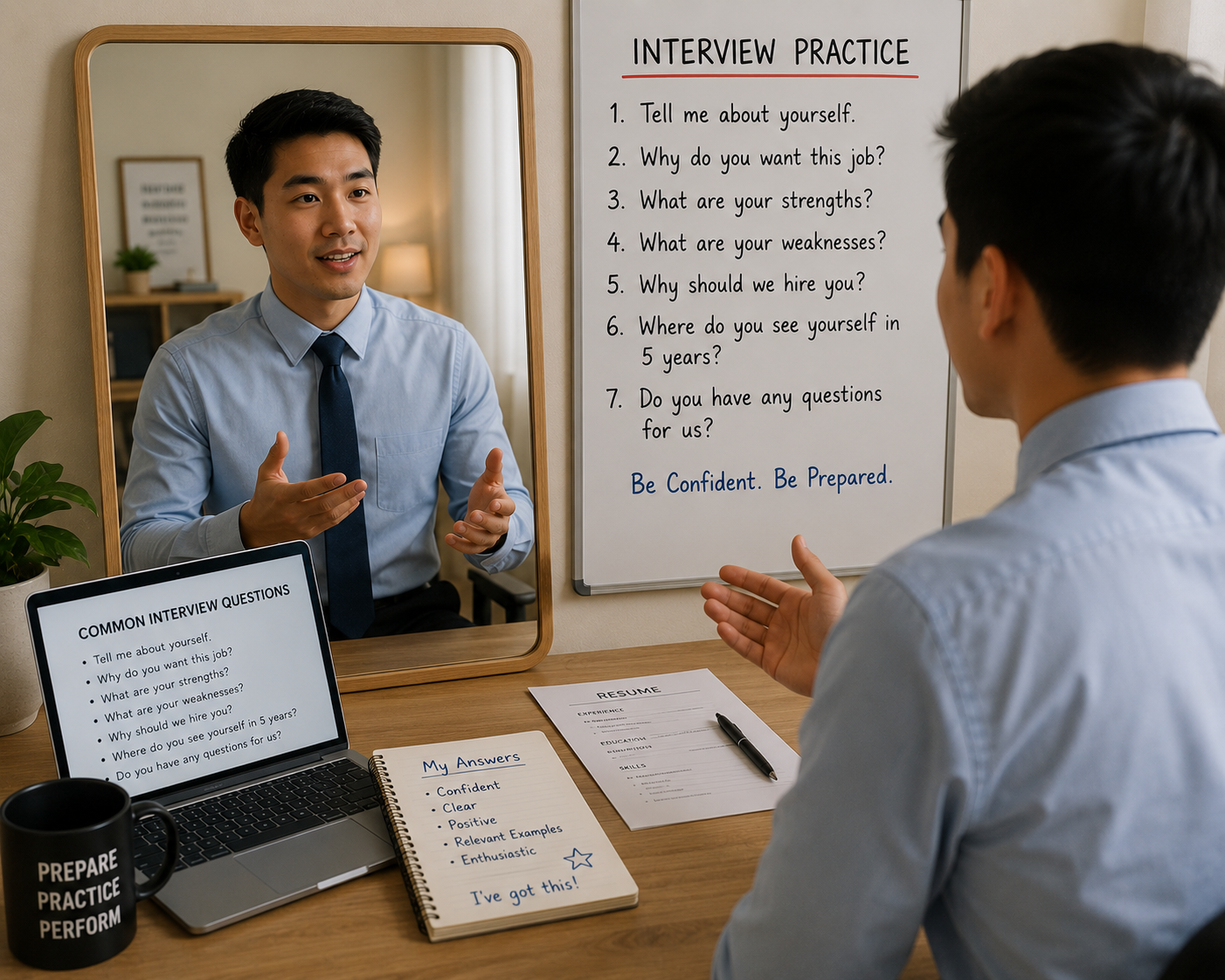
While every interview is different, some questions appear frequently.
Examples include:
Tell us about yourself.
Why do you want this job?
What are your strengths?
What are your weaknesses?
Why should we hire you?
Where do you see yourself in five years?
Tell us about a challenge you faced and how you handled it.
Practice answering these questions naturally.
Avoid memorizing scripts word-for-word.
Instead, focus on key points you want to communicate.
Prepare Real-Life Examples
Many employers use behavioral interview questions.
Examples include:
- Tell me about a time you solved a problem.
- Describe a difficult situation at work.
- Give an example of teamwork.
- Tell us about a leadership experience.
Use the STAR method:
Situation
Describe the situation.
Task
Explain your responsibility.
Action
Describe what you did.
Result
Share the outcome.
This structure helps you provide clear and professional answers.
Prepare Questions to Ask the Interviewer
Interviews are not only for employers to assess you.
They are also an opportunity for you to learn about the organization.
Good questions include:
- What does success look like in this role?
- What are the biggest challenges facing the team?
- What opportunities for growth exist?
- How would you describe the company culture?
- What are the next steps in the hiring process?
Asking thoughtful questions demonstrates interest and professionalism.
Dress Professionally
First impressions matter.
Choose attire that is:
- Clean
- Professional
- Appropriate for the role
- Comfortable
Even if the workplace has a casual culture, it is usually better to be slightly overdressed than underdressed.
Ensure:
- Clothes are neat
- Shoes are clean
- Grooming is professional
Professional appearance can boost confidence and create a positive impression.
Practice Good Body Language
Non-verbal communication plays a significant role during interviews.
Positive body language includes:
- Maintaining eye contact
- Sitting upright
- Smiling naturally
- Offering a firm handshake
- Listening attentively
Avoid:
- Slouching
- Looking distracted
- Excessive fidgeting
- Crossing your arms defensively
Confident body language helps communicate professionalism and self-assurance.
Prepare for Virtual Interviews
Many interviews now take place online.
Before a virtual interview:
- Test your internet connection
- Check your microphone
- Test your camera
- Choose a quiet location
- Remove distractions
- Ensure proper lighting
Treat virtual interviews with the same professionalism as in-person interviews.
Arrive Early
Punctuality demonstrates reliability.
For in-person interviews:
- Aim to arrive 10–15 minutes early.
For virtual interviews:
- Log in a few minutes before the scheduled time.
Being early helps reduce stress and allows you to settle before the interview begins.
Manage Interview Anxiety
Feeling nervous is normal.
To reduce anxiety:
- Prepare thoroughly
- Practice responses
- Get enough sleep
- Arrive early
- Take deep breaths
Remember that the interviewer wants to learn about you.
Focus on having a conversation rather than trying to be perfect.
Avoid Common Interview Mistakes
Common mistakes include:
Lack of Preparation
Research the company and role beforehand.
Negative Comments About Previous Employers
Stay professional and respectful.
Talking Too Much
Answer questions clearly and concisely.
Providing Vague Answers
Use specific examples.
Poor Body Language
Maintain professionalism throughout the interview.
Not Asking Questions
Show interest in the role and company.
Follow Up After the Interview
After the interview, consider sending a brief thank-you email.
You can:
- Thank the interviewer
- Express appreciation for their time
- Reaffirm your interest in the role
A professional follow-up can leave a positive final impression.
Signs of a Successful Interview
While there are no guarantees, positive signs may include:
- Good conversation flow
- Detailed discussion about the role
- Positive feedback from interviewers
- Discussion of next steps
- Extended interview duration
Regardless of the outcome, every interview provides valuable experience.
Final Thoughts
Preparing for a job interview is one of the best investments you can make in your career.
By researching the company, understanding the role, reviewing your CV, practicing common questions, and presenting yourself professionally, you can significantly improve your performance and confidence.
Remember that interviews are opportunities to showcase your skills, experience, and potential.
Preparation may not eliminate nervousness completely, but it will help you walk into the interview feeling ready and capable.
The more prepared you are, the more likely you are to leave a strong and lasting impression.