
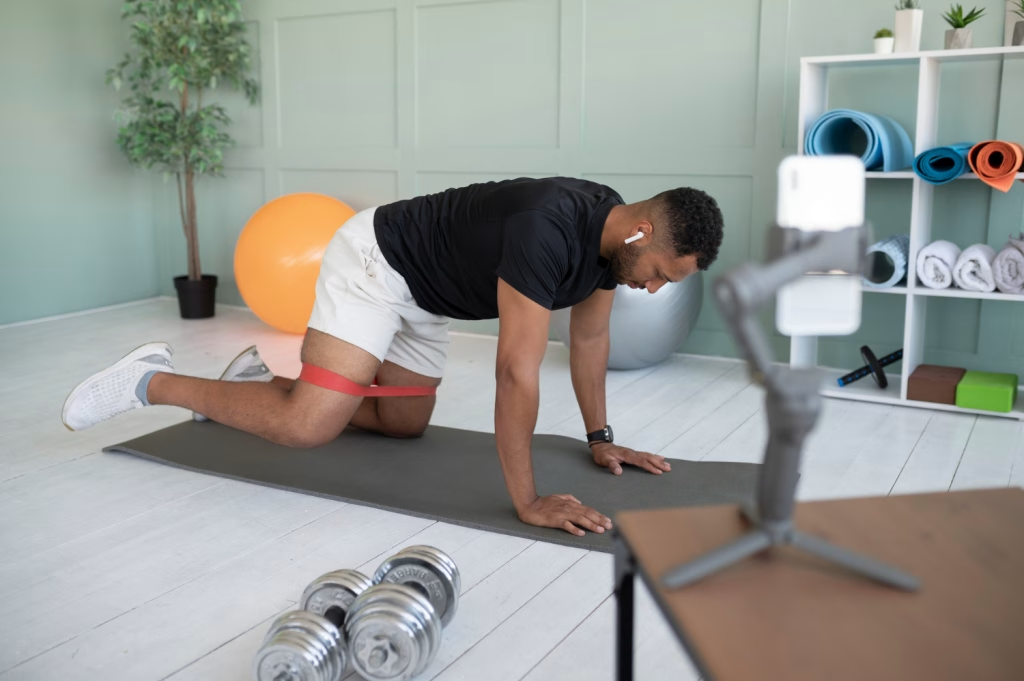
Why most workout routines fail
Many people start exercising with strong motivation. They buy new workout clothes, download fitness apps, and promise themselves that this time will be different. But after a few weeks, sometimes even days, the routine fades. The gym visits stop. Home workouts are forgotten. Guilt replaces motivation.
This usually happens not because people are lazy, but because the workout routine was never realistic in the first place. A routine that looks good on paper may not fit real life. Long work hours, family responsibilities, low energy days, and unexpected stress all make strict fitness plans hard to maintain.
A realistic workout routine is one that respects your lifestyle instead of fighting it. It works with your schedule, your energy, and your body. When fitness feels achievable, consistency becomes natural.
What realistic actually means in fitness
A realistic workout routine is not about perfection. It is not about training every day or following what influencers do online. It is about creating a plan you can repeat week after week without feeling overwhelmed.
Realistic means flexible. It means accepting that some days you will have more energy and some days you will have less. It means understanding that progress is slow, steady, and often invisible at first.
When your workout routine feels realistic, it stops being a punishment and starts becoming part of your life.
Understanding your body before planning workouts
Before you decide how often to exercise or what type of workouts to do, you need to understand your body. Everyone has a different starting point. Some people are very active at work. Others sit most of the day. Some recover quickly. Others need more rest.
A realistic workout routine begins with honesty. How active are you right now? How much time can you truly commit each week? What kind of movement do you enjoy or dislike?
Ignoring these questions leads to frustration. Answering them leads to sustainability.
The mistake of copying other people’s routines
One of the biggest fitness mistakes is copying someone else’s routine. You see a friend waking up at 5 a.m. to run. You see influencers posting intense workouts every day. You try to copy them and fail, then feel discouraged.
What works for someone else may not work for you. Their schedule, body, goals, and responsibilities are different. A realistic workout routine is personal. It is designed around your life, not someone else’s highlight reel.
Fitness is not a competition. It is a long-term relationship with your body.
Starting small is not weakness
Many people think starting small means they are not serious. In reality, starting small is one of the smartest fitness decisions you can make.
A realistic workout routine often begins with short sessions. Even ten or fifteen minutes of movement matters. These small actions build confidence and create a habit loop.
When exercise feels easy to start, you are more likely to continue. Over time, those short sessions naturally grow into longer and stronger workouts.
Choosing workouts you can actually enjoy
Enjoyment matters more than intensity. If you hate what you are doing, you will eventually quit. This is true no matter how effective the workout is.
A realistic workout routine includes activities you don’t dread. It could be walking, dancing, bodyweight exercises, cycling, stretching, or light strength training.
When movement feels enjoyable, consistency follows. When consistency follows, results come naturally.
Time management and realistic scheduling
Many people say they don’t have time to work out. Often, the problem is not time but unrealistic expectations.
A realistic workout routine fits into your existing schedule instead of forcing major changes. If you can only exercise three days a week, that is enough. If mornings are impossible, evenings can work. If weekends are free, use them.
Fitness should support your life, not compete with it.
The power of consistency over intensity
Consistency beats intensity every time. Doing moderate workouts regularly is more effective than doing extreme workouts occasionally.
A realistic workout routine focuses on showing up, not showing off. Some days will feel strong. Others will feel slow. Both are progress.
When exercise becomes a habit rather than a challenge, your body adapts naturally.
Rest is part of the routine
Many people think rest means failure. In truth, rest is where growth happens. Muscles repair, energy returns, and motivation resets.
A realistic workout routine includes rest days without guilt. It understands that recovery is necessary for long-term health.
Ignoring rest often leads to burnout, injuries, and quitting altogether.
Listening to your body
Your body is always giving feedback. Fatigue, soreness, low motivation, and pain are signals, not weaknesses.
A realistic workout routine respects these signals. It allows adjustments without shame. If your body needs a lighter day, that is okay. If you need an extra rest day, that is okay too.
Fitness is not about pushing through pain. It is about building strength with awareness.
Progress is not always visible
One of the reasons people quit is because they expect fast results. They look for changes on the scale or in the mirror and feel disappointed when they don’t see them.
A realistic workout routine focuses on non-visible progress too. Better sleep, improved mood, more energy, and reduced stress are signs that your body is responding.
Visible changes take time. Internal changes often happen first.
Adapting your routine as life changes
Life changes constantly. Work schedules shift. Family responsibilities increase. Energy levels fluctuate.
A realistic workout routine evolves with you. It is not rigid. It adjusts to new circumstances without collapsing.
This flexibility is what makes fitness sustainable over years, not weeks.
Mental health and exercise balance
Exercise is not just physical. It affects mental health deeply. Movement can reduce stress, improve focus, and lift mood.
However, when workouts become a source of pressure, they lose their benefits. A realistic workout routine supports mental wellbeing instead of adding stress.
Fitness should make your life better, not heavier.
Avoiding the all-or-nothing mindset
Many people fall into the trap of thinking that if they can’t do everything, they should do nothing. This mindset kills progress.
A realistic workout routine embraces imperfect days. Even light movement counts. Even short sessions matter.
Doing something is always better than doing nothing.
Building confidence through routine
Confidence grows from keeping promises to yourself. Every time you show up for your workout, no matter how small, you build trust with yourself.
A realistic workout routine creates these small wins regularly. Over time, fitness becomes part of your identity rather than a task.
You stop asking if you should work out. You simply do.
Nutrition and workouts working together
Exercise alone is not the full picture. How you eat affects how you feel during workouts and how well your body recovers.
A realistic workout routine goes hand in hand with balanced eating, not extreme diets. Nourishing your body supports energy and consistency.
Fitness is about supporting your body, not punishing it.
Long-term thinking changes everything
Short-term thinking leads to quick burnout. Long-term thinking creates sustainable habits.
A realistic workout routine is built with the future in mind. It asks, “Can I keep this up for months or years?” If the answer is no, adjustments are needed.
Fitness is a lifestyle, not a deadline.
Motivation comes after action
Many people wait to feel motivated before working out. In reality, motivation often comes after action.
A realistic workout routine removes pressure and lowers resistance. When starting feels easy, action happens more often. Motivation follows naturally.
You don’t need to feel ready. You just need to begin.
Making fitness part of your identity
When exercise becomes something you do rather than something you are, it feels optional. When it becomes part of who you are, it feels natural.
A realistic workout routine helps build this identity slowly. You stop trying to “get fit” and start living an active life.
This mindset shift is powerful and lasting.
Final thoughts
A realistic workout routine is not flashy. It is not extreme. It is steady, flexible, and kind to your body.
It respects your time, energy, and mental health. It grows with you and supports your life instead of controlling it.
When fitness feels realistic, it becomes sustainable. And when it becomes sustainable, it becomes life-changing.