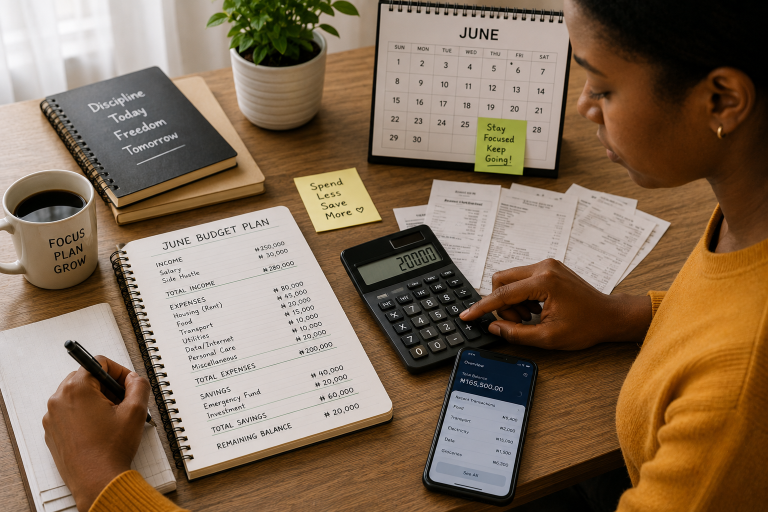

Financial confidence is something many people want, but few feel they truly have. You see it in how someone talks about money, how calmly they handle bills, or how they make decisions without panic. Meanwhile, many others feel unsure, anxious, or even ashamed when money comes up. They doubt themselves, second-guess every decision, and feel like they are always one step behind.
The truth is, financial confidence is not something you are born with. It is something you build, slowly and intentionally. It does not come from earning a huge salary overnight or suddenly becoming rich. It comes from understanding your money, trusting your decisions, and knowing you can handle whatever comes your way.
In this article, we will talk honestly about financial confidence. We will explore why so many people lack it, how daily habits affect it, and how you can build it step by step without pressure. This is not about perfection. It is about progress you can actually maintain.
The keyword guiding this entire discussion is financial confidence, and everything here is designed to help you grow it gradually, realistically, and sustainably.
What Financial Confidence Really Means
Financial confidence is not about having a lot of money. It is about feeling secure with the money you have. It is the calm feeling that you understand your income, your expenses, and your limits. It is the belief that even if things go wrong, you can figure them out.
People with financial confidence are not fearless. They still worry sometimes. The difference is that worry does not control them. They trust their ability to make decisions and recover from mistakes.
This confidence comes from clarity, not luck.
Why Many People Struggle With Financial Confidence
Many people grow up without proper money education. Money is often treated as a sensitive topic, something not discussed openly at home or in school. As a result, people enter adulthood without basic financial skills and feel embarrassed to admit it.
Others have experienced financial setbacks like debt, job loss, or failed businesses. These experiences can damage self-belief and create fear around money decisions.
Social comparison also plays a role. Seeing others appear financially successful on social media can make you feel inadequate, even when those images do not reflect reality.
All these factors slowly erode financial confidence if not addressed.
Why Building Financial Confidence Takes Time
Financial confidence does not grow overnight because it is built on habits and experiences. Trust, whether in yourself or others, takes time to develop. Money is no different.
Every small decision you make, every bill you pay on time, every expense you track adds to your confidence. At the same time, rushing the process often leads to mistakes that reduce confidence.
Slow growth is not weakness. It is stability.
Understanding Your Money Is the First Step
You cannot feel confident about what you do not understand. Many people avoid looking closely at their finances because it feels overwhelming or uncomfortable.
But understanding your money is empowering. Knowing how much you earn, how much you spend, and where it goes removes uncertainty. Uncertainty is what fuels fear.
Financial confidence begins the moment you stop avoiding your numbers and start facing them calmly.
Why Small Wins Matter More Than Big Goals

Big financial goals can feel inspiring, but they can also feel distant and intimidating. When goals feel too far away, motivation drops.
Small wins, on the other hand, are immediate and encouraging. Saving a small amount consistently, reducing unnecessary spending, or paying off a minor debt can boost confidence quickly.
Each small win proves to your mind that you are capable. Confidence grows through evidence, not motivation.
How Consistency Builds Financial Confidence
Consistency creates familiarity. The more often you engage with your finances, the less scary they become.
When you regularly check your spending, plan your budget, or review your goals, money becomes something you manage, not something that controls you.
Over time, this consistent interaction builds comfort, and comfort leads to confidence.
Why Comparing Yourself to Others Hurts Financial Confidence
Comparison is one of the fastest ways to lose financial confidence. Everyone’s financial journey is different. Income levels, responsibilities, opportunities, and timing vary widely.
When you compare your behind-the-scenes reality to someone else’s highlight reel, you create unrealistic expectations and unnecessary pressure.
Financial confidence grows when you focus on your own progress, not someone else’s pace.
Learning From Mistakes Without Shame
Mistakes are part of every financial journey. Overspending, bad investments, or poor planning happen to almost everyone at some point.
The difference between those who grow confident and those who stay stuck is how they respond to mistakes. Shame leads to avoidance. Learning leads to growth.
When you treat mistakes as lessons instead of failures, you strengthen your financial confidence instead of damaging it.
How Budgeting Supports Financial Confidence
Budgeting is often misunderstood as restriction. In reality, it is a tool for awareness and control.
A simple budget helps you see what is possible and what is not. It sets boundaries that protect you from regret and stress.
Knowing your limits is not limiting. It is empowering.
Why Financial Confidence Is Emotional, Not Just Logical
Money decisions are deeply emotional. Fear, guilt, hope, and pressure all influence how we handle finances.
Ignoring emotions does not make them disappear. Acknowledging them helps you manage them.
Financial confidence grows when you understand your emotional relationship with money and learn to respond instead of react.
Building Confidence Through Honest Self-Assessment
Being honest about your financial situation is not self-criticism. It is self-respect.
When you clearly see where you stand, you can make realistic plans. Pretending or avoiding only delays progress.
Confidence comes from knowing the truth and still choosing to move forward.
Why Saving Any Amount Builds Financial Confidence
Many people believe saving only matters if the amount is large. This belief prevents them from saving at all.
Saving even a small amount regularly builds confidence because it creates a sense of security and control.
It sends a message to yourself that you are preparing for the future, even if progress feels slow.
The Role of Patience in Financial Growth
Patience is essential for building financial confidence. Results take time, and impatience often leads to poor decisions.
When you allow progress to happen at a natural pace, you reduce stress and increase trust in the process.
Patience keeps confidence steady instead of fragile.
Why Financial Confidence Improves Decision-Making
When you feel confident, you make clearer decisions. You are less likely to panic, rush, or follow others blindly.
Confidence allows you to pause, think, and choose what aligns with your goals.
This improved decision-making further strengthens financial confidence, creating a positive cycle.
How Knowledge Strengthens Financial Confidence
Learning basic financial concepts empowers you. Understanding interest, savings, debt, and investments removes fear of the unknown.
You do not need to become an expert. Even basic knowledge improves confidence significantly.
Knowledge turns confusion into clarity.
Why Avoiding Debt Shame Is Important
Debt can damage financial confidence, especially when surrounded by shame. But shame does not fix debt. Action does.
Facing debt honestly and creating a realistic plan to manage it restores confidence gradually.
Progress, not perfection, rebuilds trust in yourself.
The Importance of Celebrating Progress
Many people focus only on what they have not achieved. This mindset keeps confidence low.
Celebrating progress, no matter how small, reinforces positive behavior.
Recognition motivates consistency, and consistency builds confidence.
How Financial Confidence Affects Other Areas of Life
Financial confidence influences mental health, relationships, and career choices. When money stress reduces, clarity increases.
You feel more capable, more independent, and more secure.
Confidence in money spills into confidence in life.
Why Slow Growth Is Sustainable Growth
Fast financial changes often come with high risk and stress. Slow growth allows learning, adjustment, and stability.
Sustainable progress protects confidence from sudden collapse.
Slow does not mean stagnant. It means steady.
Building Financial Confidence Through Planning
Planning gives direction. Even a simple plan provides structure and reassurance.
Plans do not need to be perfect. They need to be flexible and realistic.
Planning reduces uncertainty, and reduced uncertainty builds confidence.
How Financial Confidence Helps You Handle Setbacks
Setbacks are inevitable. Financial confidence helps you respond calmly instead of emotionally.
Instead of giving up, you adjust and continue.
Confidence turns setbacks into pauses, not endings.
The Long-Term Impact of Financial Confidence
Over time, financial confidence transforms how you view money. Fear reduces. Control increases.
You stop feeling behind and start feeling capable.
This shift is powerful and life-changing.
Final Thoughts on Building Financial Confidence Slowly
You do not need sudden success to feel confident. You need understanding, patience, and consistency.
Financial confidence is built quietly through daily habits and honest choices.
When you stop rushing and start trusting the process, confidence grows naturally.
Your journey does not need to look impressive. It needs to feel stable.