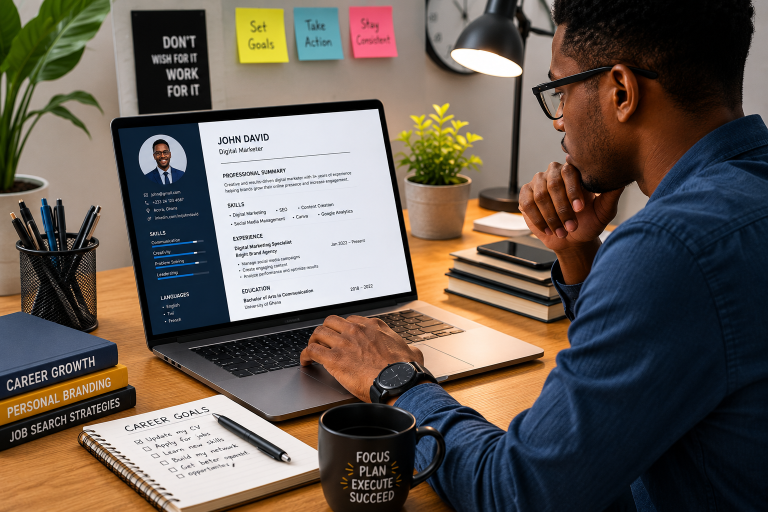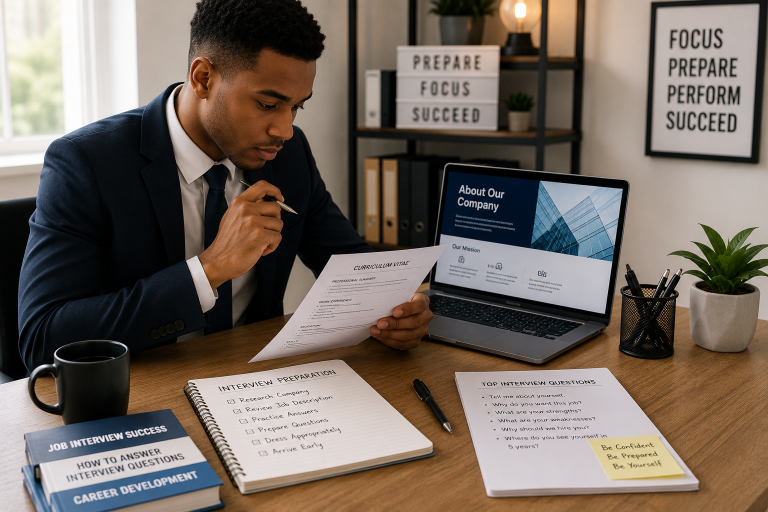

Your CV is often the first impression an employer gets about you. Before they meet you, call you, or invite you for an interview, they usually look at your CV to decide whether you are worth considering.
Unfortunately, many job seekers spend hours searching for vacancies but very little time improving their CVs. They send the same CV to every employer and then wonder why they receive few responses.
The truth is that a weak CV can prevent qualified candidates from getting interviews. Even if you have the right education, skills, or experience, a poorly prepared CV may fail to communicate your value to employers.
The good news is that improving your CV does not always require a complete rewrite. Small changes can make a significant difference. Updating your information, improving formatting, highlighting achievements, and tailoring your CV to specific jobs can increase your chances of getting noticed.
If you are planning to apply for jobs soon, this guide will help you improve your CV and present yourself more professionally to potential employers.
Why Your CV Matters
Employers often receive dozens or even hundreds of applications for a single position. They do not have time to read every CV in detail.
In many cases, recruiters spend only a few seconds scanning a CV before deciding whether to continue reading or move to the next applicant.
This means your CV must quickly communicate who you are, what you can do, and why you are a suitable candidate.
A strong CV helps employers understand your qualifications, experience, achievements, and skills. It also shows that you are organized, professional, and serious about your job search.
Your CV is not just a list of information. It is a marketing document that presents your professional value.
Start by Updating Your Personal Information
One of the simplest ways to improve your CV is to make sure your personal information is accurate and current.
Check your full name, phone number, email address, and location. Ensure that recruiters can easily contact you.
Your email address should look professional. Avoid using informal or outdated email addresses that may create a poor impression.
If you have changed phone numbers recently, make sure your current number is listed. Many candidates miss opportunities simply because employers cannot reach them.
You should also check for spelling mistakes in your name or contact details. These small errors can make your CV appear careless.
Write a Strong Professional Summary
The professional summary is usually one of the first sections recruiters read.
This short paragraph should introduce who you are, what you do, and what value you can bring to an organization.
Instead of writing a generic statement such as:
“I am a hardworking individual seeking employment in a reputable organization.”
Try something more specific:
“Detail-oriented administrative professional with three years of experience supporting office operations, managing records, and delivering excellent customer service. Skilled in communication, organization, and problem-solving.”
A strong summary immediately gives employers a reason to continue reading.
Tailor Your CV to the Job You Are Applying For
One common mistake job seekers make is sending the same CV to every employer.
Different jobs require different skills and experiences. Your CV should reflect the specific position you are applying for.
Before submitting your application, carefully read the job description. Look at the qualifications, skills, and responsibilities the employer is seeking.
Then adjust your CV to highlight the experiences and strengths that match those requirements.
For example, if a job emphasizes customer service, make sure your customer service experience is clearly visible. If it focuses on administrative skills, highlight your office management, record-keeping, and communication abilities.
Tailoring your CV shows employers that you understand their needs and have taken time to prepare a relevant application.
Highlight Achievements, Not Just Responsibilities
Many CVs only list job duties.
For example:
- Answered phone calls.
- Filed documents.
- Assisted customers.
While these responsibilities are important, employers are often more interested in results and achievements.
Instead of simply listing tasks, explain what you accomplished.
For example:
- Managed customer inquiries and helped improve customer satisfaction.
- Organized office records, reducing document retrieval time.
- Assisted with administrative processes that improved workflow efficiency.
Achievements help employers understand the impact you made in previous roles.
Even if you have limited work experience, you can highlight achievements from internships, volunteer work, school projects, or leadership positions.
Improve the Layout and Formatting
A CV should be easy to read.
Recruiters do not want to struggle through cluttered sections, inconsistent fonts, or poor formatting.
Keep your design simple and professional.
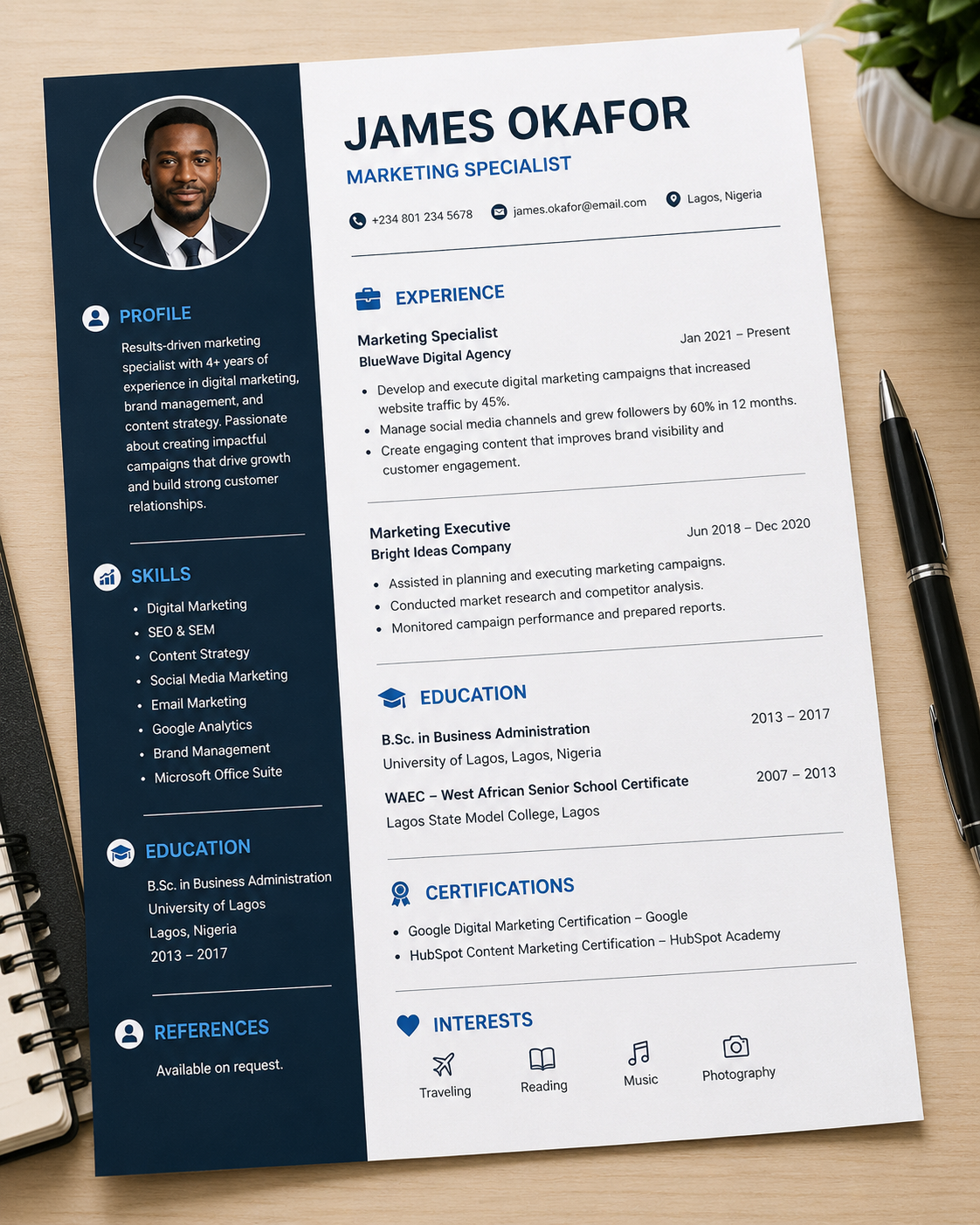
Use clear headings such as:
- Professional Summary
- Education
- Work Experience
- Skills
- Certifications
- References
Use consistent font styles and sizes throughout the document.
Leave enough white space between sections so the CV looks clean and organized.
Avoid excessive colors, decorative graphics, or complicated layouts that may distract from your content.
A clean CV immediately appears more professional.
Keep Your CV Relevant
Many job seekers include unnecessary information that adds little value.
Employers do not need every detail about your life history.
Focus on information that supports your application.
Ask yourself:
Does this information help demonstrate my suitability for the job?
If the answer is no, consider removing it.
Your CV should focus on:
- Relevant education
- Relevant work experience
- Relevant skills
- Certifications
- Professional achievements
Removing unnecessary details makes your CV stronger and easier to read.
Showcase Your Skills Clearly
Employers want to know what you can do.
Your skills section should be clear and easy to find.
Include both technical and soft skills where relevant.
Examples include:
Technical Skills
- Microsoft Office
- Data Entry
- Graphic Design
- Social Media Management
- Accounting Software
- Database Management
Soft Skills
- Communication
- Teamwork
- Problem Solving
- Time Management
- Leadership
- Customer Service
Only include skills you genuinely possess and can demonstrate if asked during an interview.
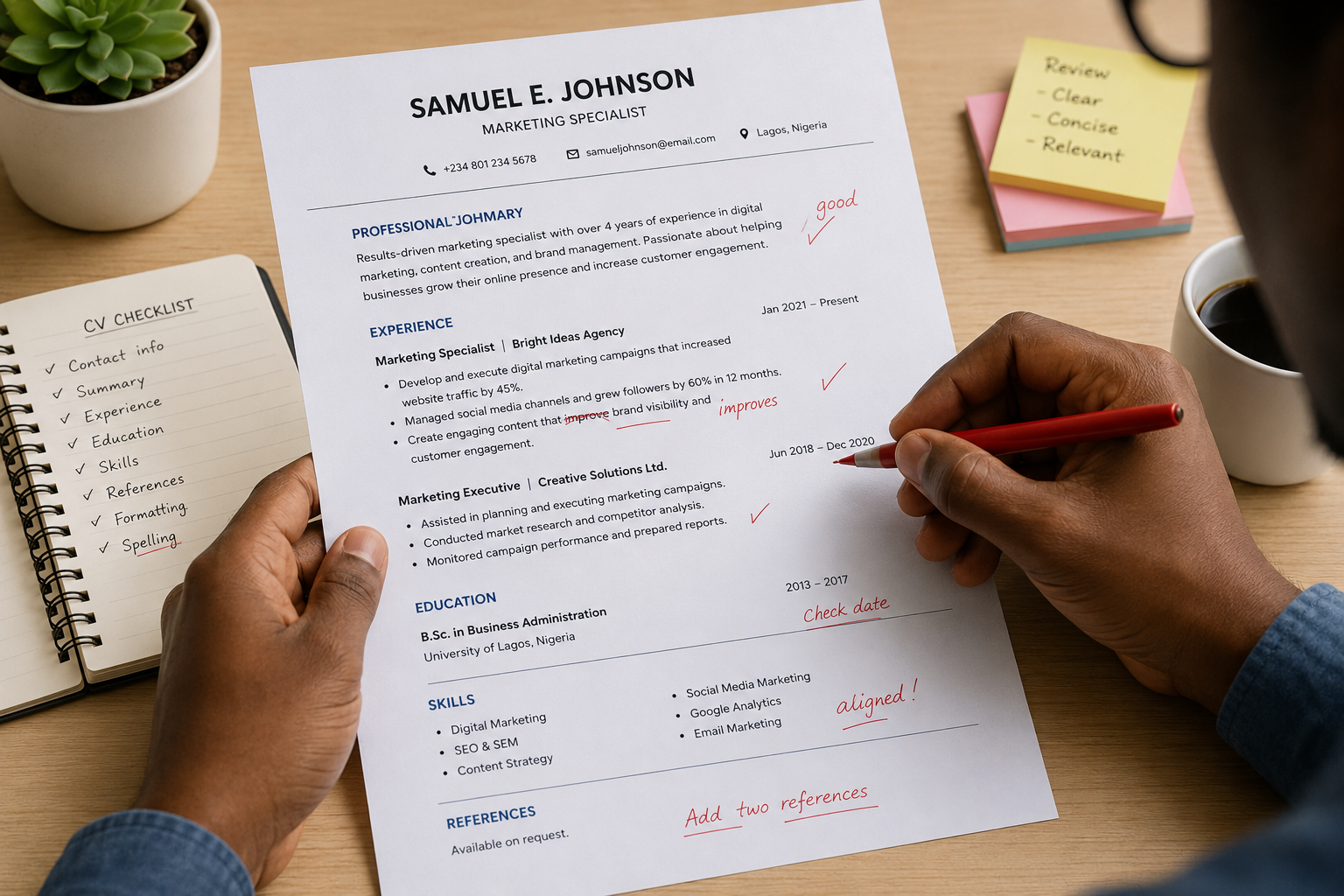
Check for Spelling and Grammar Errors
Spelling mistakes can damage your credibility.
Even a highly qualified candidate can appear careless if their CV contains obvious errors.
After completing your CV, review it carefully.
Read each section slowly.
Check:
- Names
- Dates
- Job titles
- Contact details
- Grammar
- Punctuation
It is also helpful to ask someone else to review your CV. A fresh pair of eyes may spot mistakes you missed.
Attention to detail matters.
Update Your Education and Certifications
Make sure your education section reflects your most recent qualifications.
Include:
- Institution name
- Qualification obtained
- Year completed
If you have completed professional courses, workshops, or certifications, include them as well.
Employers appreciate candidates who continue learning and improving their skills.
Even short courses can strengthen your application when they relate to the position.
Use Strong Action Words
Action words make your experience sound more impactful.
Instead of using weak phrases, use words such as:
- Managed
- Coordinated
- Organized
- Developed
- Implemented
- Assisted
- Improved
- Led
- Achieved
- Delivered
These words help demonstrate initiative and responsibility.
For example:
Instead of:
“Responsible for organizing records.”
Write:
“Organized and maintained company records to improve document accessibility.”
The second version sounds stronger and more professional.
Keep Your CV a Reasonable Length
Many recruiters prefer concise CVs.
If you are early in your career, one to two pages is usually enough.
Experienced professionals may require slightly more space, but every section should add value.
Avoid filling pages with unnecessary details.
A shorter, focused CV often performs better than a long, repetitive one.
Save Your CV in the Right Format
Before sending your CV, save it in a professional format.
PDF is usually the safest option because it preserves formatting across devices.
Use a clear file name such as:
John_Doe_CV.pdf
Avoid names like:
newcvfinal2.pdf
myresumeupdated.pdf
A professional file name creates a better impression.

Review Your CV Before Every Application
Your CV should not be a document you create once and forget.
Before every application:
- Review the job description.
- Update relevant information.
- Highlight matching skills.
- Check for errors.
- Ensure contact details are correct.
Taking a few extra minutes can significantly improve your chances of being shortlisted.
Final Thoughts
Your CV is one of the most important tools in your job search.
A well-written CV can help you stand out from other applicants and increase your chances of getting interviews. Before applying for jobs, take time to update your information, improve your professional summary, highlight achievements, tailor your content to the role, and check for errors.
Remember that employers are not just looking for qualifications. They are looking for candidates who can clearly communicate their value.
The effort you invest in improving your CV today could open the door to your next opportunity.