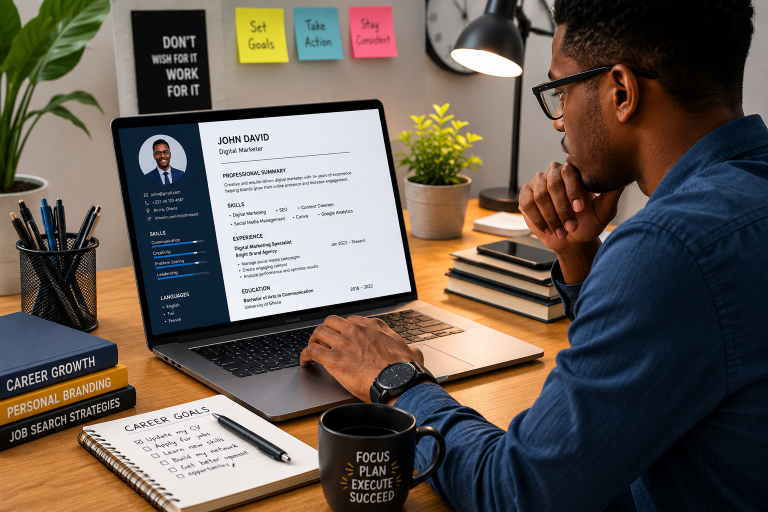
Working remotely or in a hybrid job can feel like a dream at first — no daily commute, flexible hours, and the comfort of working in your favorite space. But as time goes on, that freedom can quickly blur into distraction. Suddenly, your couch looks more inviting than your laptop, your kitchen becomes your new meeting spot, and you realize productivity doesn’t just happen by chance — it requires intention.
Remote work productivity has become one of the biggest topics in modern career discussions. Companies across the world are still learning how to balance flexibility with efficiency, while employees are figuring out how to get things done without burning out. The shift to remote and hybrid work is more than just a trend — it’s a permanent evolution of how we approach work. Yet, staying productive from home or between office and remote setups remains a challenge that needs both mindset and method.
In this article, we’ll explore what really helps you stay productive in a remote or hybrid job — not from a robotic routine perspective, but from a human angle. We’ll talk about habits, focus, balance, motivation, and structure — the things that make remote work sustainable and fulfilling.
Understanding What Productivity Means in Remote Work
Many people mistake productivity for busyness. But being productive in a remote or hybrid job means producing quality results consistently — not just filling time. When you’re working from home, productivity is about finding rhythm rather than forcing intensity. You need to learn when you work best, what tools support your focus, and how to keep communication clear with your team.
According to a 2023 Microsoft Work Trend Index, more than 85% of employees believe they are just as productive working remotely, but nearly the same percentage of managers say they struggle to measure that productivity. This gap shows that remote work productivity isn’t only about working harder — it’s about creating clarity, structure, and self-discipline that both you and your organization can see and feel.
The keyword here is balance — balance between autonomy and accountability, between flexibility and consistency, and between focus and rest.
Build a Routine That Feels Natural
Your routine doesn’t have to look like anyone else’s — it just needs to work for you. Remote or hybrid work thrives on flexibility, but without a rhythm, it becomes chaos. The trick is to set a flexible but predictable schedule.
Start your day with intention. Don’t roll straight out of bed and into your inbox. Give yourself a “commute ritual,” even if it’s just a 10-minute walk, meditation, or coffee on your balcony. This helps your brain switch from “home mode” to “work mode.”
Then, segment your day into focused work periods. Try something like the Pomodoro Technique (25 minutes of focus, 5-minute breaks) or the 90-minute deep work method (intense work followed by 20 minutes of rest). These small productivity systems create boundaries that your brain learns to respect over time.
Even in hybrid setups — where you might go to the office two or three days a week — routines matter. Have a consistent start and stop time whether you’re at home or in the office. The goal isn’t rigidity; it’s flow.
Create a Work Space That Energizes You
Your environment deeply affects your productivity. When your workspace blends with your personal space, your focus weakens. You start associating the couch with emails, or your bed with work calls — and that’s not healthy.
Create a dedicated workspace, even if it’s a small corner of your room. Keep it clean, well-lit, and free from distractions. If you can, face a window or hang motivational art nearby. Use ergonomic furniture — a supportive chair, proper lighting, and an adjustable desk if possible.
Studies show that natural light can improve productivity by up to 40% (Harvard Business Review, 2018). So if you can position your desk near a window, do it. Add some greenery — a plant or two can boost your mood and reduce stress.
The point is to design an environment that signals your brain, “this is where I focus.” Once your brain associates that space with productivity, your attention naturally sharpens when you sit there.
Communication Is the Bridge in Remote Work
When you’re not physically present, communication becomes your most valuable productivity tool. Misunderstandings, silence, and unclear expectations can derail your entire day.
Always over-communicate — not in a spammy way, but in a way that builds trust. Share progress updates, ask clarifying questions, and document your tasks. Tools like Slack, Microsoft Teams, Trello, and Asana make this easier.
If you’re working in a hybrid setup, make sure both office and remote colleagues get equal access to information. Don’t let remote workers feel “out of the loop.” Share notes after meetings, keep calendars transparent, and make feedback loops continuous.
Remote productivity thrives when communication is proactive. Don’t wait until confusion builds — clarify early and often.
Manage Distractions Like a Pro
One of the hardest parts of remote work is fighting distractions — Netflix, social media, endless snacks, or even family members. The secret isn’t to eliminate distractions entirely (that’s unrealistic), but to manage them.
Use simple tools like website blockers (e.g., Freedom, Cold Turkey, or StayFocusd) during your deep work sessions. Turn off non-essential notifications. Tell family or roommates your work hours to minimize interruptions.
Also, learn to differentiate between productive breaks and procrastination. Stretching, grabbing water, or taking a five-minute walk are good breaks. Scrolling through TikTok for 30 minutes — not so much.
Remember: every distraction costs you “re-entry time” — the minutes it takes to regain focus. According to the University of California, Irvine, it takes about 23 minutes to refocus after a single distraction. That’s a productivity killer.
Prioritize Tasks the Smart Way
Remote work can sometimes feel like juggling ten things at once. The solution? Prioritize ruthlessly.
Use the Eisenhower Matrix — divide your tasks into four types: urgent and important, important but not urgent, urgent but not important, and neither. Focus on what truly drives results.
Also, set clear daily and weekly goals. Don’t just make to-do lists — give them meaning. What will move your business or career forward this week? What can wait? That clarity reduces decision fatigue and helps you focus on what matters.
When working remotely, accountability starts with you. So give yourself structure and track your progress visibly — whether through a planner, app, or calendar.
Take Care of Your Mental and Physical Health
You can’t stay productive if your body and mind are drained. One of the biggest remote work traps is burnout — and it’s sneaky. Because your workspace is at home, you might feel you never really “clock out.”
Set boundaries. When the day ends, close your laptop and step away. Go outside, stretch, call a friend, or do something that reminds you that life is more than work.
Exercise regularly — even short daily movement makes a difference. Yoga, a quick walk, or light stretching refreshes your brain and boosts concentration.
Equally important is nutrition and hydration. Skipping meals or living on caffeine may feel productive short-term but kills your energy over time. Keep water nearby and choose brain-friendly foods — nuts, fruits, whole grains, and greens.
Mental health check-ins are crucial too. If you feel isolated, talk to colleagues or join online communities. Remote work doesn’t mean working alone — it means connecting differently.
Use the Right Tools for Productivity
Technology can be both your best friend and your biggest distraction. The trick is to use it intentionally.
For task management, try Notion, ClickUp, or Asana. For time tracking, apps like Toggl help you see where your time really goes. For focus, tools like Brain.fm or Noisli can provide background sounds that boost concentration.
Cloud collaboration tools such as Google Workspace or Microsoft 365 make hybrid teamwork smooth, ensuring everyone has access to the same files regardless of location.
The goal isn’t to use every new app — it’s to choose the few that simplify your workflow, not complicate it.
Stay Motivated by Tracking Progress
Motivation fades when progress feels invisible. Track your wins, no matter how small. When you see progress, your motivation multiplies.
Keep a “done list” alongside your to-do list. At the end of each week, look back at what you’ve achieved. This reflection builds momentum and reinforces a positive feedback loop.
If your company uses performance trackers or OKRs (Objectives and Key Results), use them to stay aligned. Transparency helps both you and your team see what’s working — and what needs improvement.
Balance Work and Life Gracefully
The line between work and personal life can blur when your office is at home. That’s why boundaries are your best productivity tool.
Designate clear work hours and stick to them. Don’t answer emails after your set time unless it’s critical. Let your team know your schedule, and respect theirs too.
In hybrid setups, resist the pressure to “show face” in both places. Productivity isn’t about being constantly visible — it’s about being consistently effective.
Spend quality time offline. When your workday ends, disconnect. Your creativity and focus need that recovery time.
Keep Learning and Adapting
Remote and hybrid work are constantly evolving. What worked a year ago may not work today. Stay open to learning new tools, time management methods, and collaboration styles.
Read productivity blogs, join online workshops, or listen to podcasts like The Remote Work Tribe or WorkLife by Adam Grant. Staying informed keeps you adaptable and valuable in any work setup.
The most productive remote workers are lifelong learners — they’re curious, flexible, and always improving their systems.
Final Thoughts
Staying productive in a remote or hybrid job isn’t about working harder — it’s about working smarter, with more awareness and balance. It’s about designing your environment, your schedule, and your habits in a way that helps you perform your best without burning out.
The freedom of remote work comes with responsibility — to manage yourself, your time, and your energy. Once you master that, you unlock a level of focus and fulfillment that traditional office work rarely provides.
So, if you’re struggling to stay productive, start small. Adjust your space, define your routine, communicate clearly, and protect your mental health. Over time, those small changes add up to a rhythm that works — one that allows you to thrive, not just survive, in a remote or hybrid world.